




Editorial | October 10, 2026
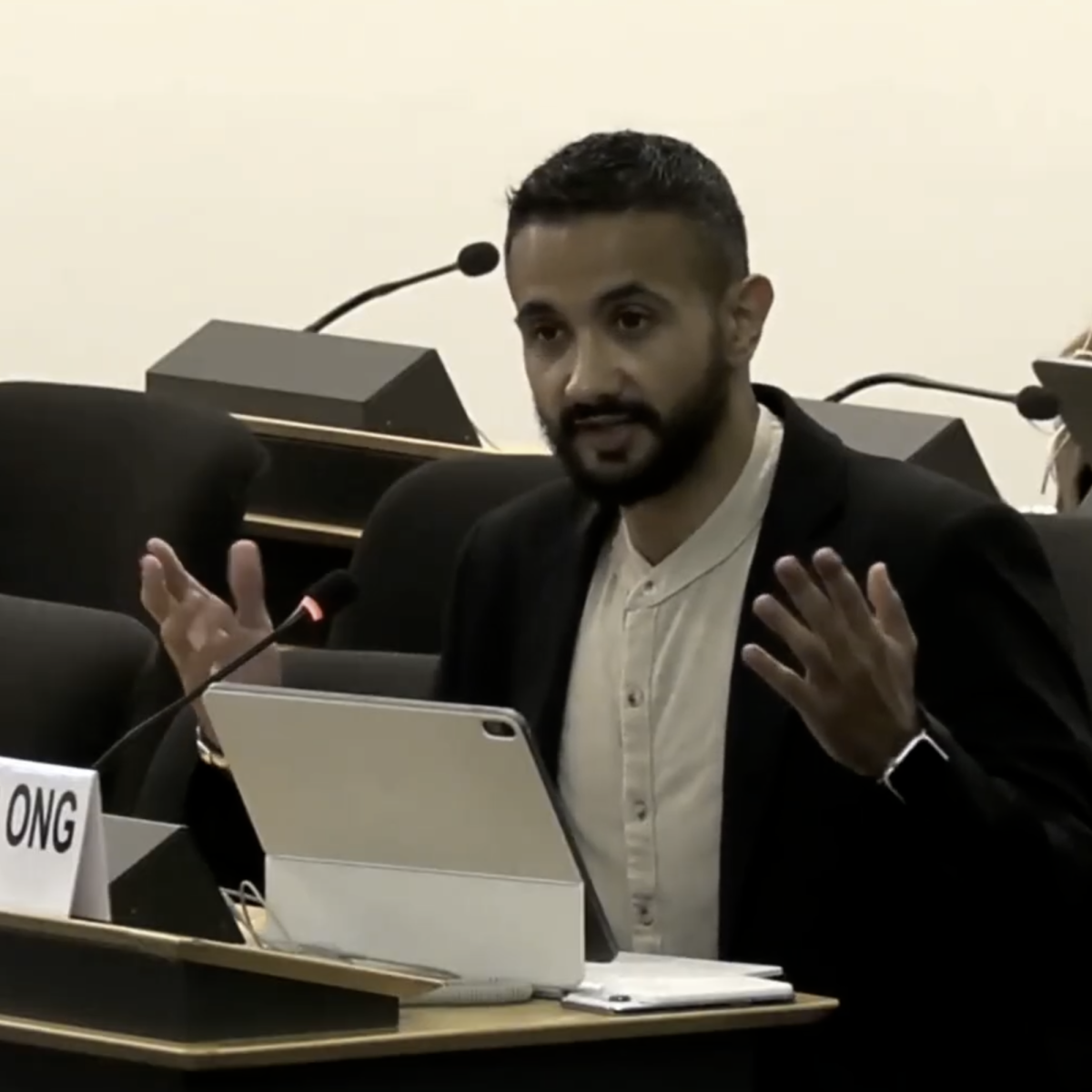
Luai Ahmed, the Yemeni journalist whose intervention challenged the use of Israel and Jews as political scapegoats. Image: UN Watch.
Some speeches matter because of the authority of the person delivering them. Others matter because they challenge an assumption that powerful people would prefer to leave untouched.
Yemeni journalist Luai Ahmed's address before the United Nations Human Rights Council belongs to the second category. Speaking for UN Watch and identifying himself as Muslim, Ahmed challenged governments that condemn injustice abroad while avoiding accountability for their conduct at home.
His central statement was direct:
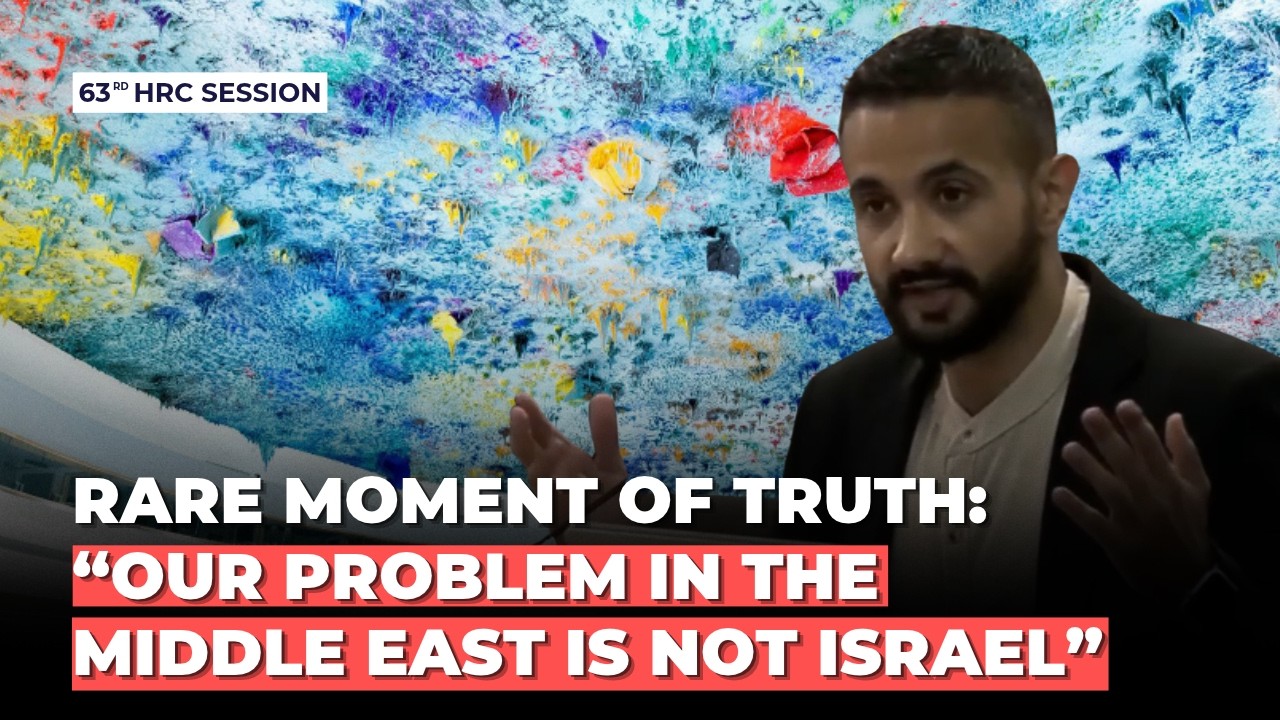
"Our problem in the Middle East is neither Israel nor the Jews. It is the Islamist dictatorships." unwatch.org
The venue matters: this was a Human Rights Council intervention, rather than a General Assembly address. UN Watch published the transcript on October 8, 2026; that publication date does not establish when the speech was delivered.
Its central claim is a sweeping political judgment, open to debate. Its strongest insight, however, deserves serious consideration: no government should be allowed to use hostility toward another country, or toward a religious community, to conceal its own failures.
Calling it the single most consequential UN speech of 2026 would require a subjective judgment and a much broader comparison. Its significance is nevertheless clear: it asks who benefits when citizens are encouraged to blame distant enemies for abuses committed by their own rulers.
A challenge addressed inward
Ahmed questioned Iran, Qatar, Syria, Pakistan and Palestinian Authority President Mahmoud Abbas. His accusations concerned repression, support for Hamas, violence against minorities, religious persecution and democratic accountability. He also recalled growing up in Yemen and encountering messages that blamed Jews and Israel for regional problems. Those statements are his allegations and recollections; the published transcript does not independently verify every claim.
The editorial importance of that challenge extends beyond any individual allegation.
A ruler who condemns another government's brutality must answer questions about his own prisons. A leader who speaks passionately about religious freedom must explain whether minorities can worship safely under his authority. A president who promises democracy must accept scrutiny of elections, political competition and the limits of his tenure.
These are ordinary tests of public accountability. Religious identity cannot provide an exemption from them.
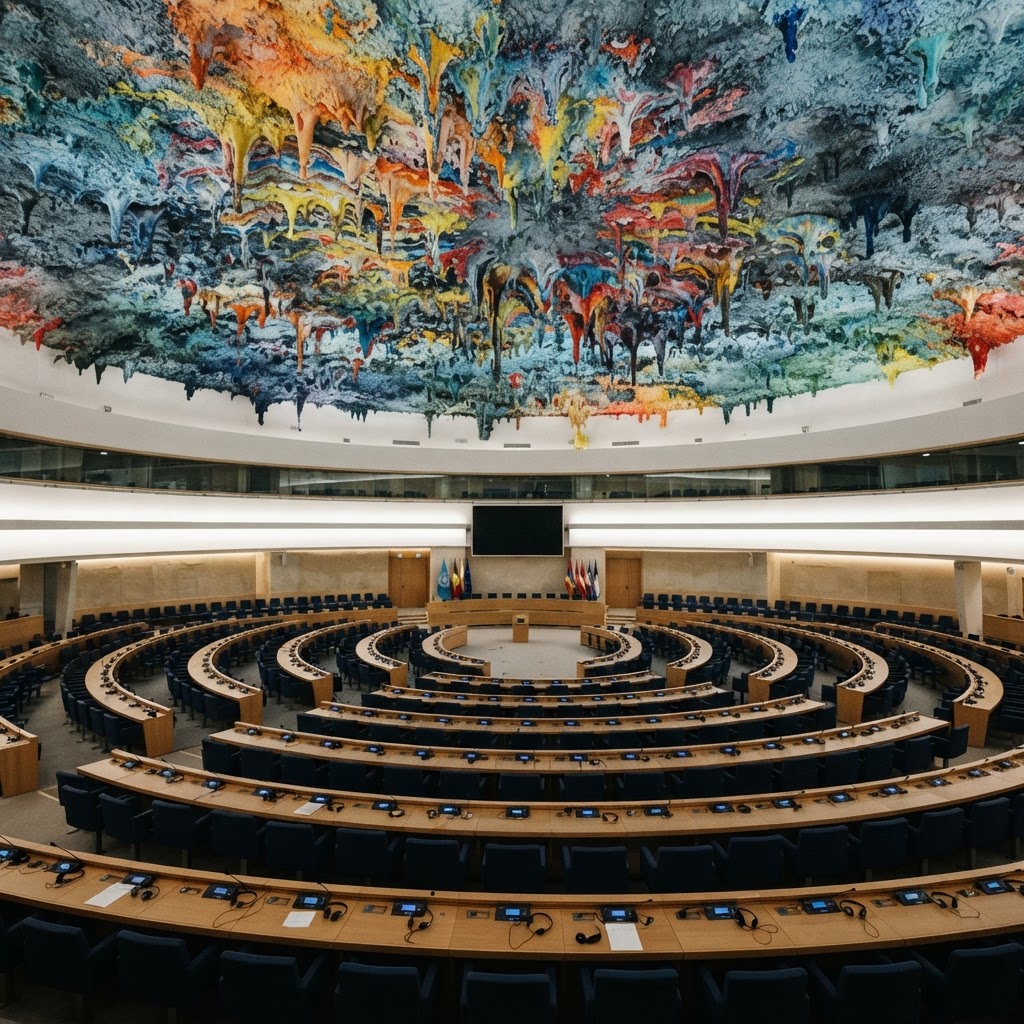
The UN Human Rights Council chamber in Geneva. This contextual illustration depicts the institution; it is not a photograph of Ahmed's specific intervention.
Muslims deserve accountable leadership
Muslim citizens deserve freedom of conscience, functioning institutions, fair courts, education, opportunity and governments that answer to them. Their aspirations should never be reduced to a permanent campaign against an external enemy.
When political leaders make loyalty to the government appear indistinguishable from loyalty to the faith, they narrow the space for peaceful disagreement. A citizen questioning corruption can be portrayed as disloyal. A journalist investigating abuse can be accused of helping foreign adversaries. A reformer demanding equal treatment can be dismissed as a threat to tradition.
The result is a political trap: defending the community becomes synonymous with defending those who govern it.
That equation must be rejected. Holding a ruler accountable can be an act of commitment to one's community. Challenging repression can express respect for the people who endure it. A Muslim questioning a government that claims Islamic legitimacy does not surrender the right to belong, believe or speak.
Jewish people cannot be made collectively responsible
Ahmed's rejection of blaming Jews carries a principle that should be beyond dispute: people must not be held collectively responsible because of their religion or ancestry.
Jewish communities around the world do not constitute a single government, party or political opinion. Treating them as a collective enemy turns political argument into prejudice and exposes ordinary people to hostility for decisions they did not make.
Criticism of Israeli government policy should address identifiable actions, officials and institutions. It should be supported by evidence and judged against consistent standards. The same discipline should apply to criticism of Iranian, Palestinian, Syrian, Pakistani or any other leadership.
Public debate must also distinguish Islam, the diverse faith practiced by Muslims, from political movements that seek power through particular interpretations of it. Criticism of an authoritarian movement cannot justify suspicion of Muslims generally.
Accountability must include Israel
Ahmed's argument is strongest when understood as a demand to end scapegoating. It becomes less persuasive if interpreted as a claim that Israeli policy has no consequences for Palestinians or neighboring populations.
Governments bear responsibility for their own decisions. Israeli authorities must answer for theirs, just as other authorities must answer for repression, corruption or violence committed under their control.
Palestinian civilians' rights do not depend on the virtue of Palestinian leaders. Israeli civilians' safety does not depend on agreement with their government. Iranian citizens' freedom does not become less urgent because their rulers invoke foreign threats.
Human dignity cannot be distributed according to political allegiance.
Rejecting antisemitism and defending Palestinian rights are compatible commitments. Rejecting anti-Muslim prejudice and confronting authoritarianism are compatible commitments. An honest public debate should make room for all four.
The test of solidarity
Ahmed's intervention invites a demanding question: does solidarity protect vulnerable people, or does it protect leaders from uncomfortable scrutiny?
True solidarity requires listening to those whose suffering embarrasses one's preferred political side. It requires concern for minorities as well as majorities, dissidents as well as loyalists, and civilians across national and religious boundaries.
Muslim societies contain many voices, disagreements and traditions. No speaker can represent them all. Ahmed's words should therefore be assessed on their evidence and reasoning, without turning him into the sole authentic Muslim voice or dismissing him because his position is uncomfortable.
His challenge deserves attention because it asks citizens to reclaim the right to question the people who claim to speak for them.
The responsibility now belongs to political and religious leaders, journalists and ordinary citizens alike: examine abuses honestly, reject collective hatred, and demand that declarations of justice be matched by conduct.
A government's denunciation of injustice abroad should begin a conversation about accountability. It should never be allowed to end one.

Comments (0)
Be the first to share your thoughts!
Your voice matters. Every comment helps build our community.
Discussion Starters
No comments yet. Be the first to share your thoughts!