




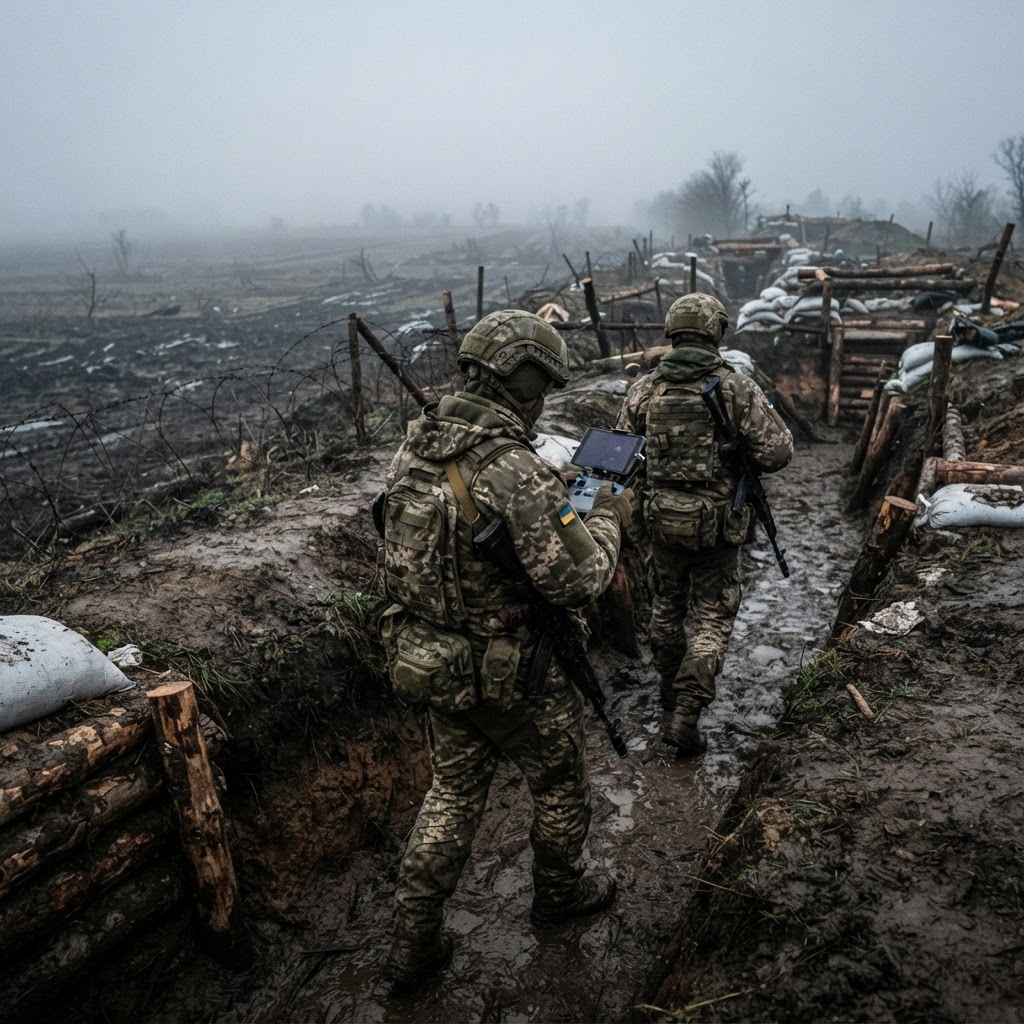
The Collapse That Never Came
KYIV — By every conventional calculation, this war should be over.
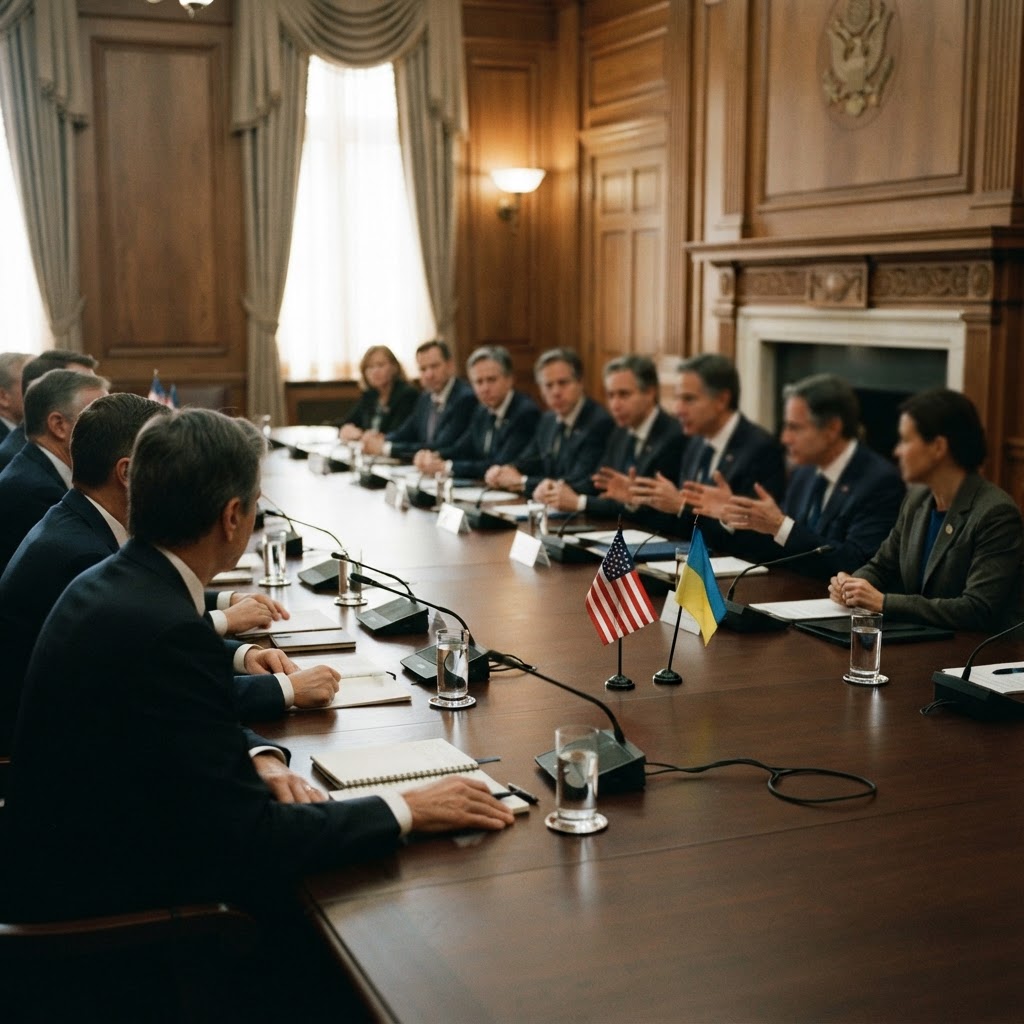
The United States — for three years Ukraine's indispensable arsenal, banker and intelligence partner — has, in practice, walked away. The weapons packages have dried up. The political attention has moved on. In Moscow, the American retreat was read as the closing chapter: cut off the supply line, the thinking went, and Kyiv's resistance would wither within months.
Instead, something happened that Russia's planners did not model and Russia's people cannot explain. Ukraine got harder.
Abandonment as Fuel
Rather than breaking Ukrainian morale, the American withdrawal appears to have annealed it. The message absorbed in Kyiv was brutal and clarifying: no one is coming — so become the weapon yourself.
The transformation has touched every layer of the war effort:
- A domestic arms industry running at full furnace. Ukrainian factories — dispersed, buried, and duplicated against missile attack — now turn out long-range drones, naval drones and cruise missiles at a scale unthinkable two years ago.
- A soldier culture stripped of illusion. Units that once waited on Western deliveries now improvise, adapt and iterate weekly, fielding battlefield modifications faster than Russia can counter them.
- A society on a war footing without an exit fantasy. With the hope of rescue gone, the argument for exhaustion has gone with it. Endurance has stopped being a strategy and become an identity.
The result is a combatant that is poorer than before — and far more dangerous.
The Strikes That Do Not Stop
The sharpest expression of this hardening is Ukraine's campaign of constant deep strikes inside Russia itself — and it is this campaign that is now paralyzing the country.
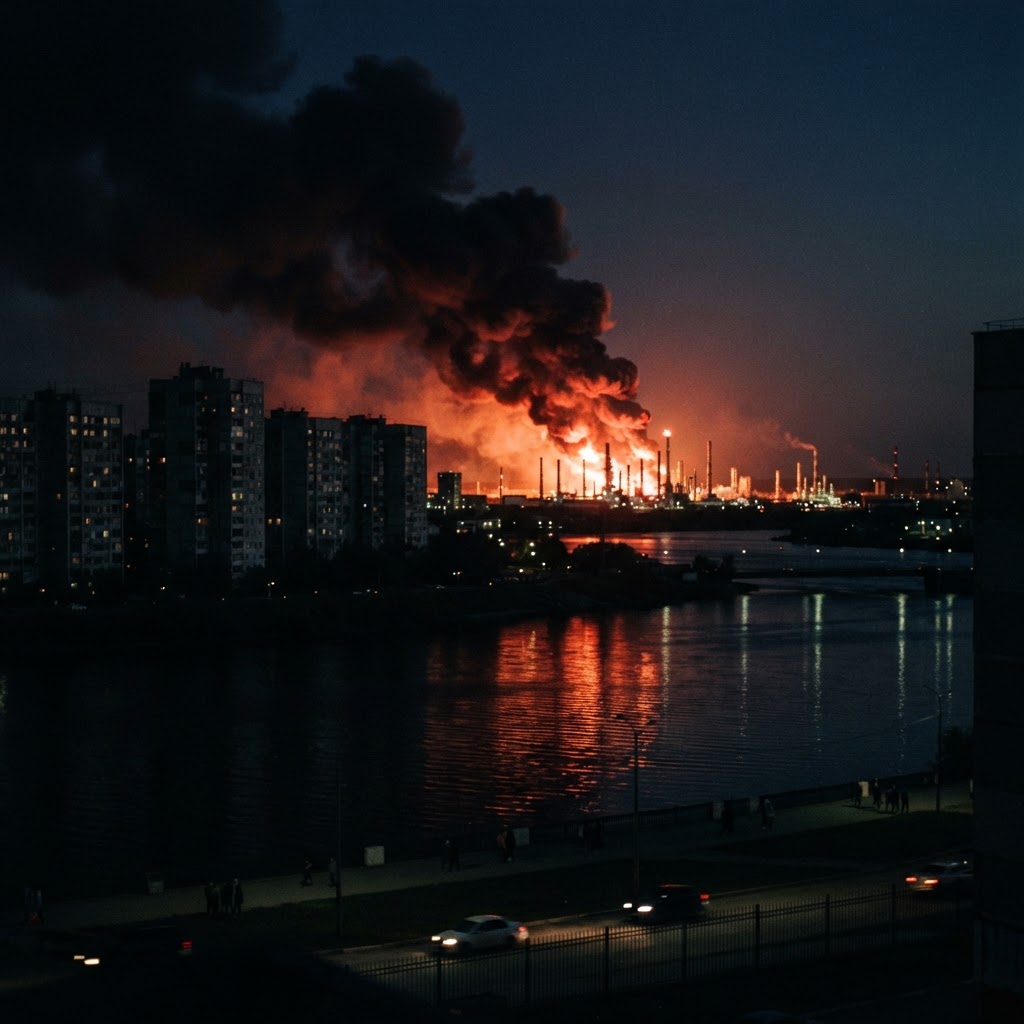
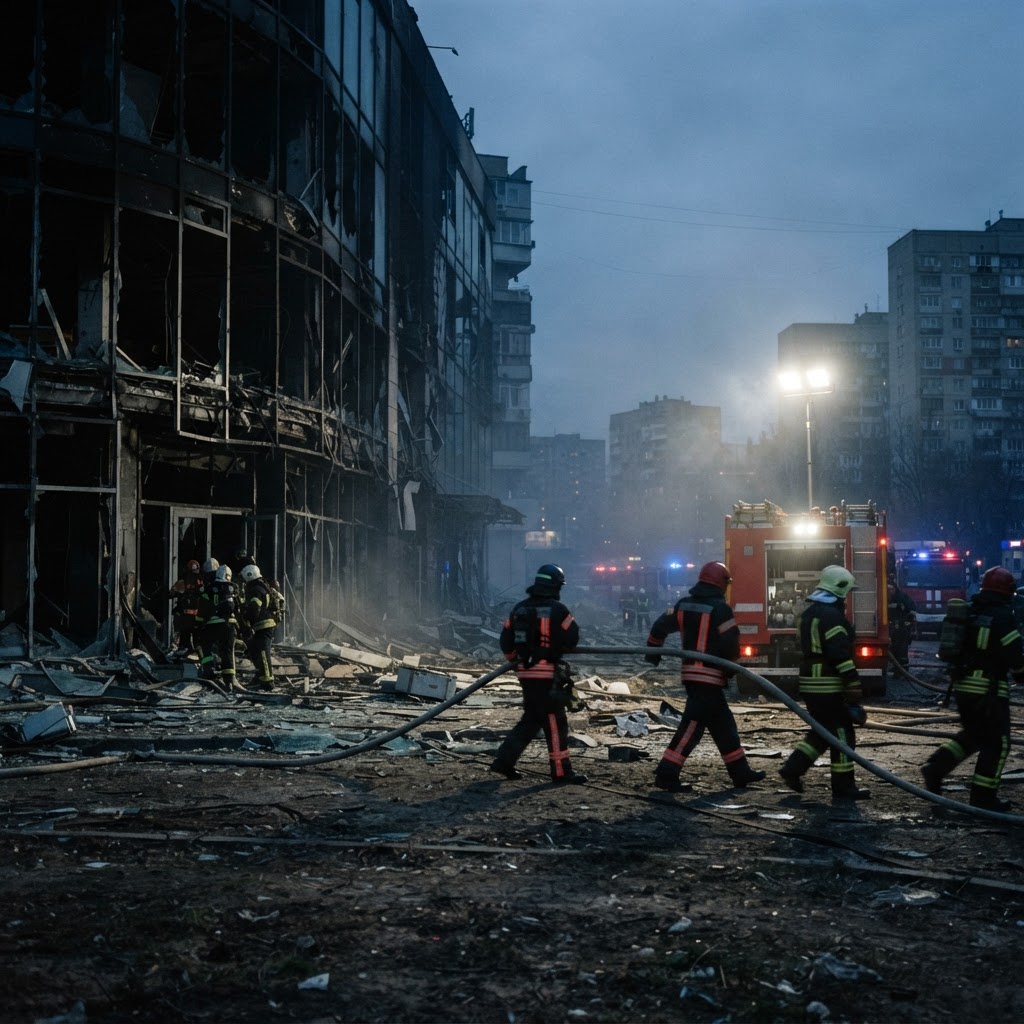
Night after night, Ukrainian long-range drones and missiles reach targets hundreds, sometimes over a thousand kilometers beyond the border: oil refineries, fuel depots, rail junctions, ammunition plants, airfields, power substations. No single strike is decisive. That is precisely the design. The campaign works like water on stone — relentless, distributed, impossible to fully defend against.
The cumulative effect has crossed a threshold:
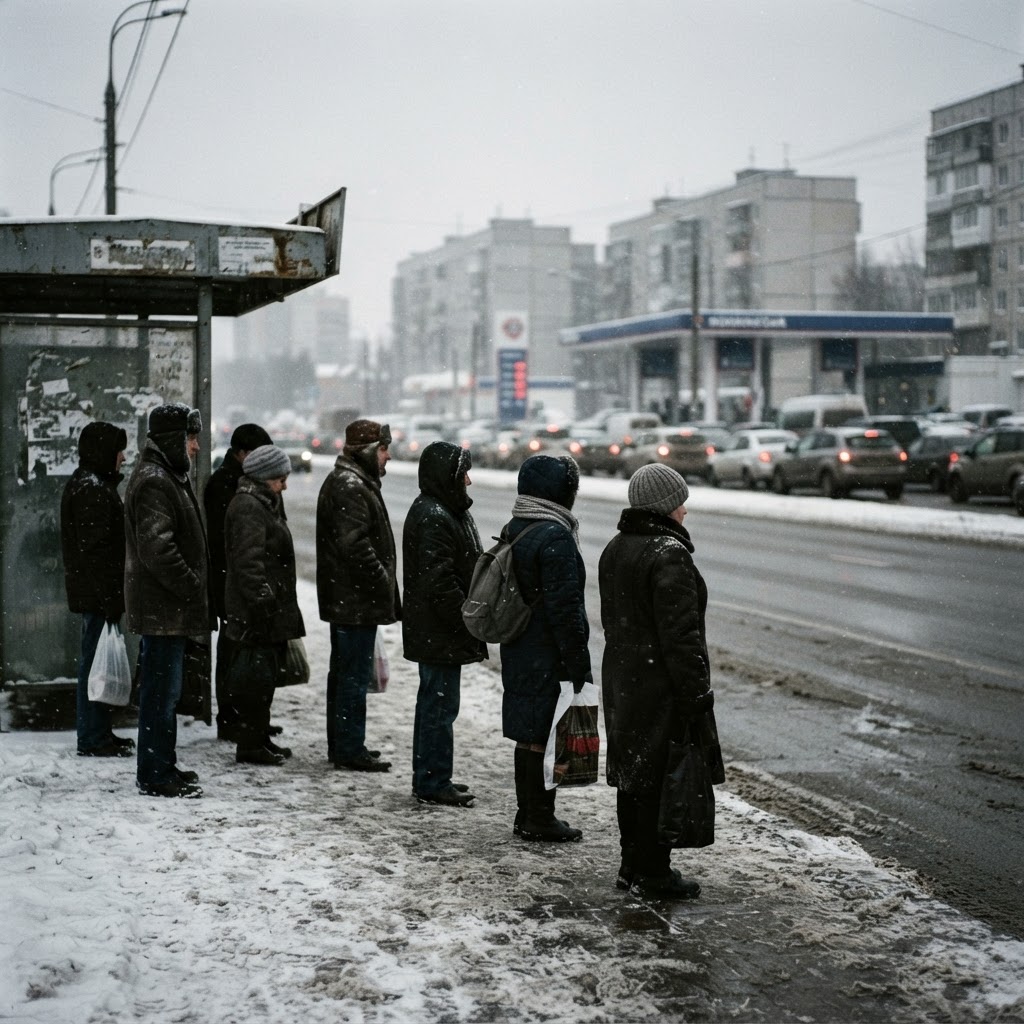
- Refining capacity keeps falling offline, forcing fuel rationing in some regions and gasoline queues not seen in decades.
- Airports across western and central Russia shut down for hours at a time, night after night, snarling civil aviation into chronic dysfunction.
- Rail and logistics arteries — the sinews of both the Russian economy and the Russian war machine — are struck, repaired, and struck again.
- Air defense is stretched beyond sense: every system pulled back to guard a refinery in the heartland is a system missing from the front.
Russia, a country whose great-power identity rests on invulnerability of the homeland, is discovering that its homeland is now the battlefield.
Perplexity at the Top
Inside Russia's leadership, the mood — insofar as it can be read through official behavior — is one of genuine perplexity. Every lever has been pulled: massed missile barrages on Ukrainian cities, energy-grid attacks meant to freeze the population into submission, grinding offensives paid for in staggering casualties. Each was supposed to be the blow that ended it.
And yet the strikes keep coming. The response from the state has settled into a ritual Russians now know by heart: the governor's midnight post about "falling debris," the claim that all drones were intercepted, the video of a burning refinery that officially is not burning.
The Kremlin's deeper problem is conceptual. Its entire theory of the war assumed Ukraine was a dependency — that Ukrainian resistance was an American input, not a Ukrainian property. Washington's abandonment was supposed to prove it. Ukraine's response has disproved it, and Russia's planners have no doctrine for an enemy that grows stronger when its patron leaves.
Bewilderment Below
Among ordinary Russians, the sentiment is less strategic and more raw: bewilderment.
How, people ask — in kitchen conversations, in guarded posts online, in fuel queues — is a smaller, poorer country, abandoned by its superpower backer, reaching deeper into Russia every month? Why are flights grounded in cities a thousand kilometers from the front? Why is gasoline scarce in a petrostate? Three years of television promised a special operation that was always nearly finished. The glow on the night horizon says otherwise.
The war was sold to Russians as something that happened elsewhere, to others. Its arrival at their refineries, their airports and their fuel pumps — delivered by a nation they were told was collapsing — has produced a cognitive dissonance the state's propaganda was never built to manage.
The New Shape of the War
None of this means Ukraine is winning cheaply. It remains outnumbered and outgunned, its cities still bleed under Russian barrages, and the loss of American support carries costs no ingenuity fully replaces.
But the strategic picture has inverted in a way few predicted. The question that opened this phase of the war was how long Ukraine could survive without America. The question closing it is different, and it is being asked in Russian:
How long can Russia function like this?
This is a developing story. The New Dispensation will update as events unfold.
Comments (0)
Be the first to share your thoughts!
Your voice matters. Every comment helps build our community.
Discussion Starters
No comments yet. Be the first to share your thoughts!