




Breaking News
Mexico has been thrown into chaos following a major security operation against one of the country’s most notorious cartel leaders, setting off a violent backlash that left roads blocked, vehicles and businesses burning, communities terrified, and authorities scrambling to restore control.
The immediate trigger was the operation targeting Nemesio Oseguera Cervantes, known as “El Mencho,” the feared leader of the Jalisco New Generation Cartel (CJNG). Public reporting from Reuters and the BBC said the operation ended with El Mencho being captured in a military raid and then dying shortly afterward from injuries sustained during the confrontation.
What followed was swift and brutal retaliation.
Cartel retaliation spread fast
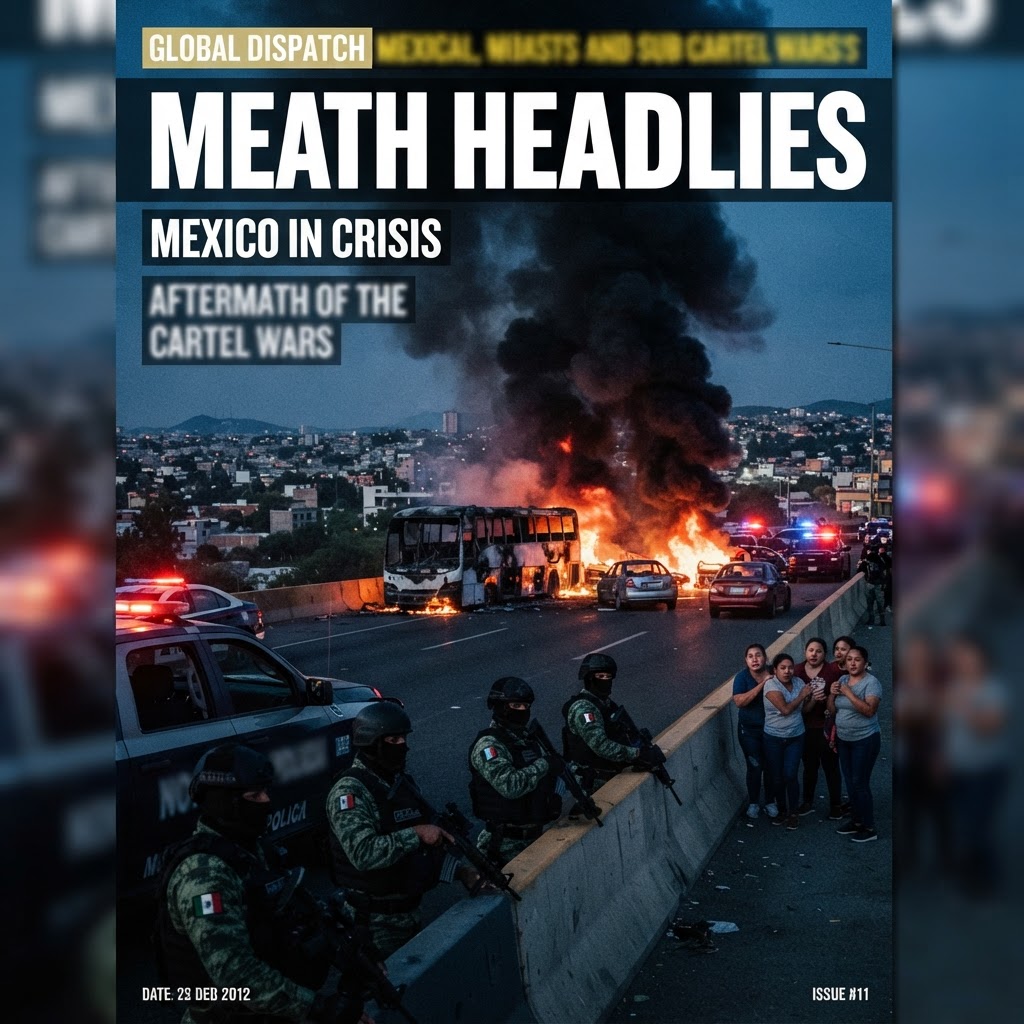
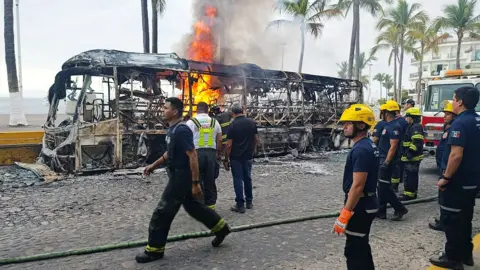
As word of the operation spread, cartel-linked violence erupted across multiple parts of Mexico. Reuters and the BBC reported that cartel members set vehicles, buses, businesses and other properties on fire, while also creating burning roadblocks, scattering spikes on highways, and paralyzing traffic in affected corridors.
Smoke rose above urban areas as blackened vehicles burned on roadsides and in intersections. In some places, daily life ground to a halt as frightened residents rushed indoors and travelers sought shelter.
The violence was especially visible in Jalisco and areas influenced by the CJNG network, but the shockwaves spread far wider, feeding a sense of national instability and reviving memories of earlier episodes in which cartel groups responded to high-profile arrests or killings with public terror.
Businesses, buildings and private property caught in the chaos
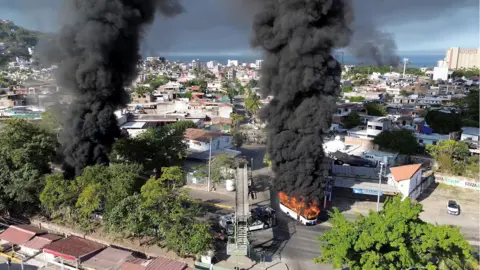
Reports from international media and local coverage described a pattern of arson, destruction, and intimidation. Cartel operatives were reported to have torched cars, buses, shops, banks and commercial properties, while neighborhoods in some areas feared further escalation.
The message behind the violence appeared unmistakable: to demonstrate that even after a major blow to cartel leadership, the network retained the power to punish the state and frighten the public.
For ordinary civilians, the distinction between political violence and criminal violence disappeared quickly. Streets emptied, commercial activity stopped, and entire communities were forced into a posture of fear.
Scenes of panic in tourist and urban zones
One of the most striking aspects of the unrest was how visibly it spilled into places associated not only with crime routes but also with commerce and tourism.
The BBC reported that tourists in Puerto Vallarta were told to shelter in place, while around 300 visitors were stranded at the airport after flights were disrupted by the surrounding violence. Witnesses described scenes resembling a war zone, with smoke plumes, burning vehicles, and a climate of fear spreading far beyond the immediate site of the military operation.
That matters because it shows that cartel retaliation in Mexico is no longer confined to hidden rural zones or isolated trafficking corridors. When these networks strike back, they increasingly do so in a way designed to create maximum public visibility, economic disruption, and psychological shock.
The Mexican government’s response
Mexico’s government moved quickly to frame the moment as a major security victory, while at the same time trying to calm a frightened public.
President Claudia Sheinbaum urged citizens to remain calm and informed, while praising the security forces that carried out the operation. According to public reporting, the raid involved the Mexican army, supported by the National Guard and Air Force, with complementary intelligence support from the United States.
The government also said multiple people had been arrested in the aftermath of the violence, including suspects tied directly to the attacks and others accused of looting amid the chaos.
At the same time, the government faced the familiar political dilemma that follows major cartel confrontations: how to present strength without appearing unable to protect the public from the immediate revenge that often follows.
A familiar pattern in Mexico’s drug war
The events fit a pattern that Mexicans know too well.
For years, cartel groups have responded to arrests, extraditions, and killings of senior figures with displays of spectacular violence — not only to hit back at the state, but to send a message to rivals, residents, and political authorities. Burning roadblocks, hijacked vehicles, attacks on businesses, and sudden local paralysis have become part of the grim vocabulary of cartel retaliation.
That is why this episode carries significance beyond one operation or one cartel boss. Even when the state lands a dramatic blow against organized crime, the public often experiences the aftermath not as relief, but as an immediate surge of insecurity.
Why the reaction matters as much as the operation
The fall of a figure like El Mencho is undeniably significant. He had long been considered one of the most powerful and wanted drug traffickers in Mexico, with a major role in organized narcotics flows and cartel warfare.
But the retaliation reveals a central truth about the Mexican security crisis: removing a single leader does not automatically dismantle the machinery of terror below him.
The cartel reaction showed continued operational reach, continued access to manpower, and the ability to unleash disruption across roads, towns, and commercial areas at short notice. That raises the question that now hangs over the government response: Was this a decisive weakening of the cartel, or the start of a dangerous transition in which subordinates compete through even more violence?
Public fear, political pressure
For many Mexicans, the most immediate reality is not strategy but fear.
When cartel retaliation spills into public roads, airports, business districts, and residential areas, it sends the message that no one is entirely outside the shadow of the drug war. The destruction of vehicles and properties, the sudden shutdown of movement, and the spectacle of organized arson all deepen public anxiety about whether the state can truly secure daily life.
This also increases political pressure on the federal government. A successful operation against a cartel leader can quickly turn into a public-relations crisis if the retaliation appears to overwhelm local order or expose persistent state weakness.
What comes next
Mexico now enters a dangerous period of uncertainty.
Authorities will likely intensify security deployments, pursue arrests connected to the retaliation, and work to show that the state — not the cartel — controls the aftermath. But much will depend on whether the government can prevent a second wave of attacks and whether the CJNG fractures, regroups, or doubles down.
For now, the images coming out of Mexico are stark: burning vehicles, shattered public calm, frightened communities, and a government trying to prove that one of the biggest blows ever dealt to organized crime will not be followed by wider national disorder.
That is the real test now facing Mexico.
Editor’s note: This article is based on public reporting from Reuters and the BBC on the February 2026 operation against CJNG leader El Mencho and the retaliatory violence that followed. Some early public accounts described the event as a capture followed by death in custody from injuries sustained during the raid, while official descriptions and news coverage also framed it more broadly as a killing during the military operation.
Comments (0)
Be the first to share your thoughts!
Your voice matters. Every comment helps build our community.
Discussion Starters
No comments yet. Be the first to share your thoughts!