




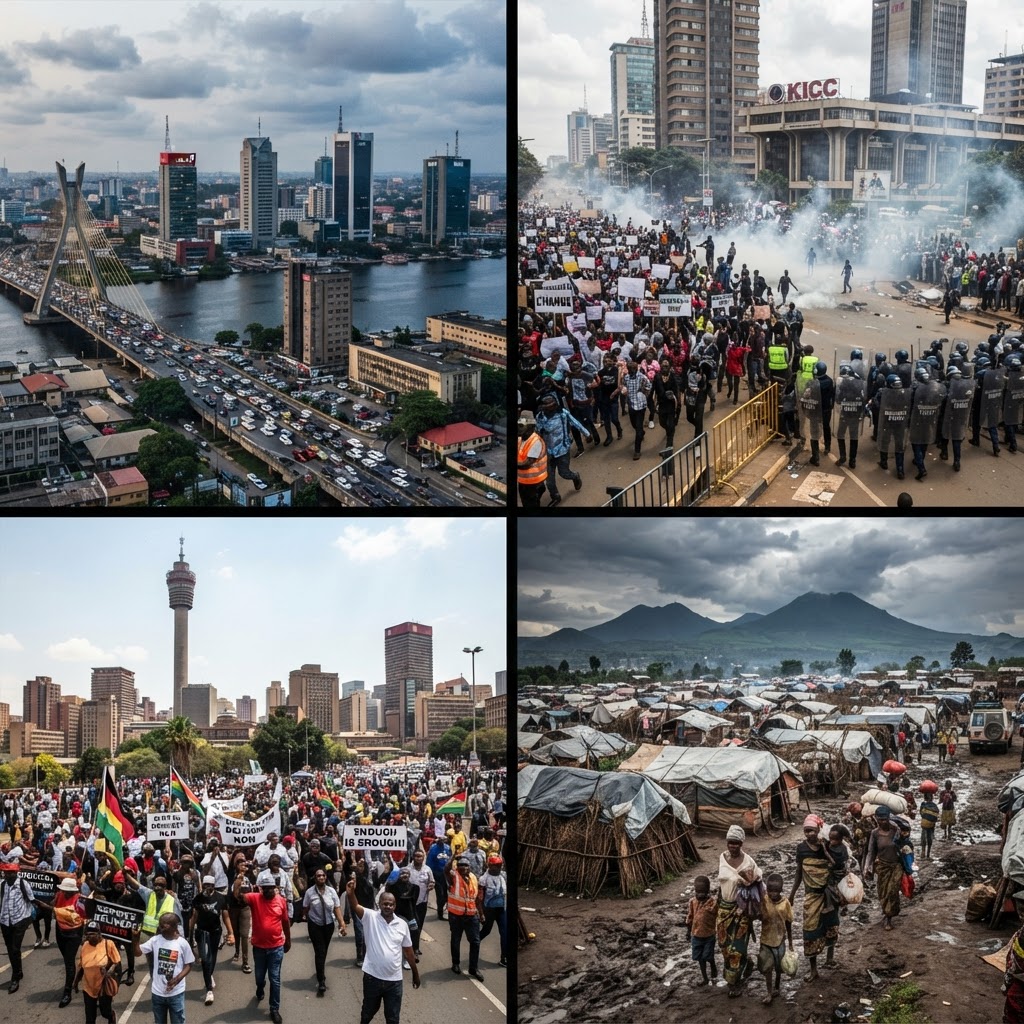
Africa’s current events picture is being shaped by pressure from every direction. In Nigeria, Kenya, South Africa, and the Democratic Republic of Congo, the dominant themes are economic strain, public anger, security tension, and the struggle of governments to restore confidence while responding to fast-moving crises.
These four countries are very different, but together they tell a larger continental story in July 2026: citizens are demanding more from the state, prices and livelihoods remain under pressure, and humanitarian and security emergencies are colliding with political debate in ways that are impossible to ignore.
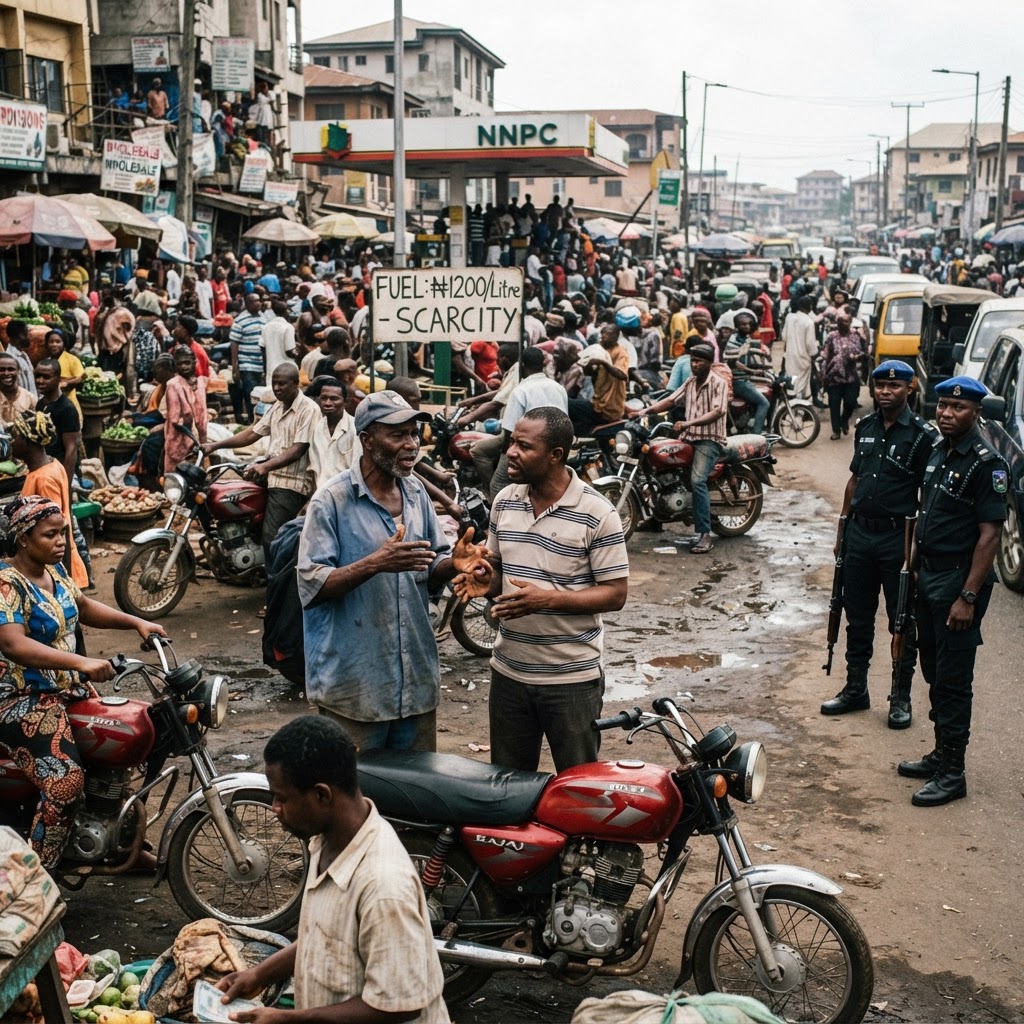
Nigeria is balancing growth hopes with inflation and daily hardship
Nigeria remains one of the continent’s most consequential political and economic stories. Recent Reuters reporting highlighted the World Bank’s view that the Nigerian economy could still grow in 2026, but that optimism is being checked by inflation pressure linked to higher fuel costs and wider geopolitical shocks. Reuters also reported that consumer inflation picked up again, a sign that the cost-of-living crisis remains central to everyday public concern.
That means the country is living with two stories at once. On one side are reform language, growth forecasts, and efforts to stabilize the economy. On the other are the practical realities facing households and small businesses that continue to struggle with prices, transport costs, and weakened purchasing power. For many Nigerians, the real test is not macroeconomic language, but whether life becomes more affordable and secure in visible ways.
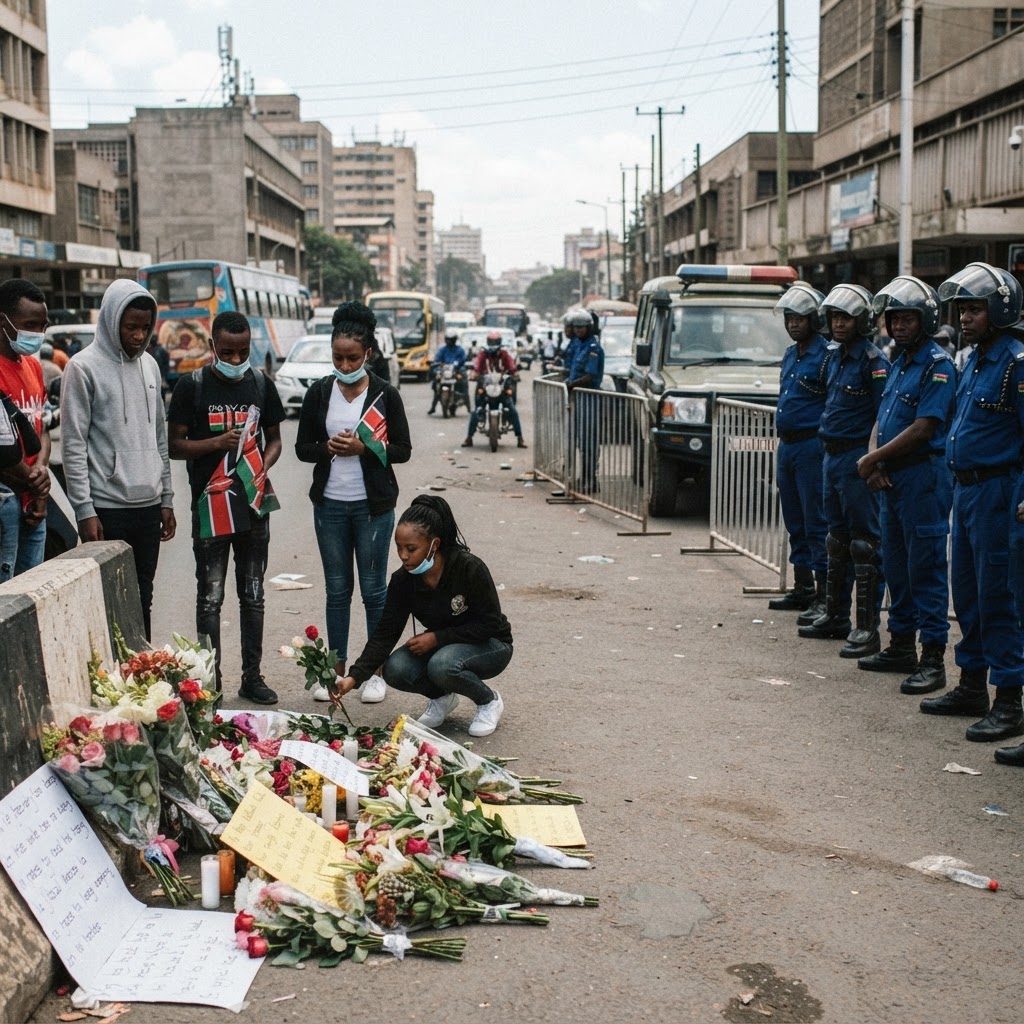
Kenya’s protest memory still shapes the national mood
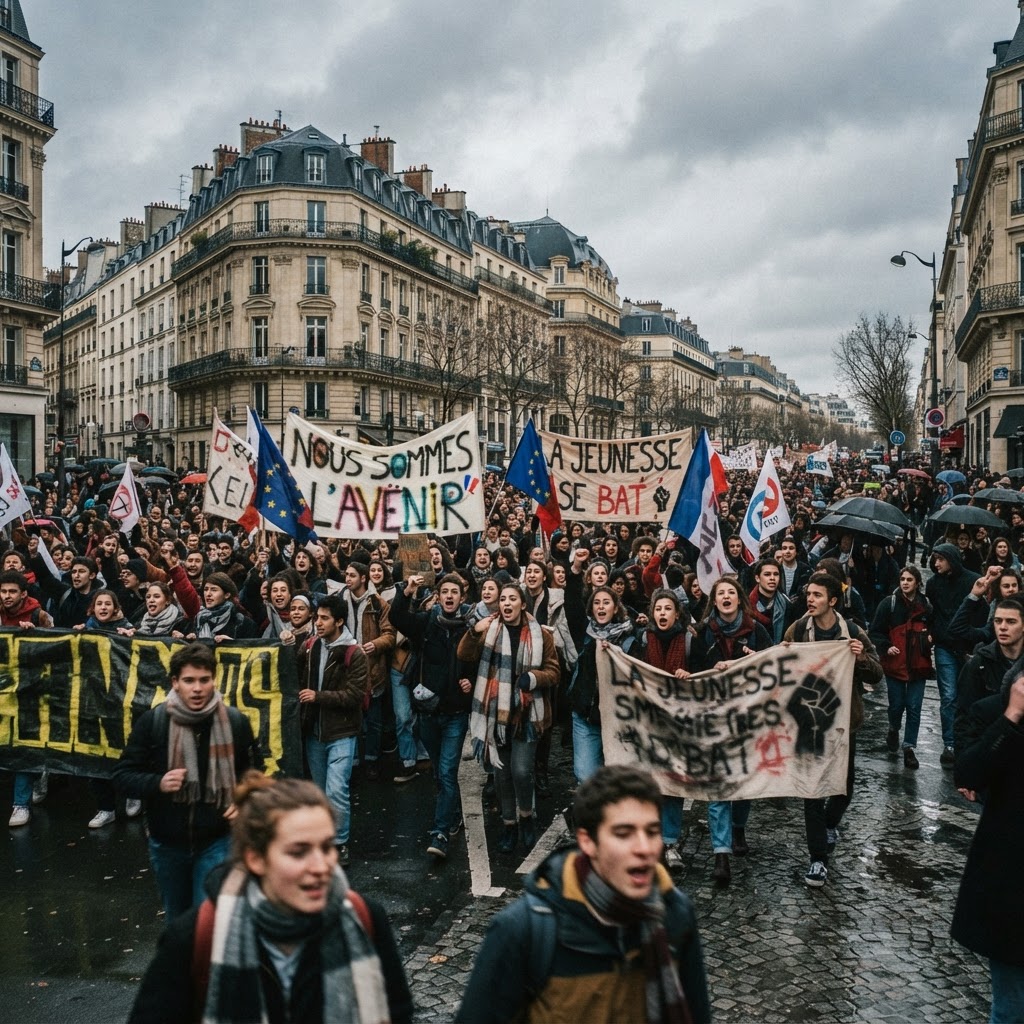
Kenya is still feeling the force of the anti-government protest wave that reshaped its politics. Reuters reported that police dispersed groups marking the anniversary of the deadly 2024 demonstrations, while BBC coverage showed memorial gestures, arrests, roadblocks, and heavy security around key civic sites. The immediate confrontation may have changed form, but the underlying frustrations have not disappeared.
The larger issue in Kenya is trust. Young citizens, civil society actors, and many ordinary families continue to press questions about taxation, accountability, public spending, and the cost of living. Even symbolic acts of remembrance now carry political weight. Kenya’s story is therefore not only about protest in the streets, but about a deeper argument over whether the political class understands how sharply public patience has worn down.
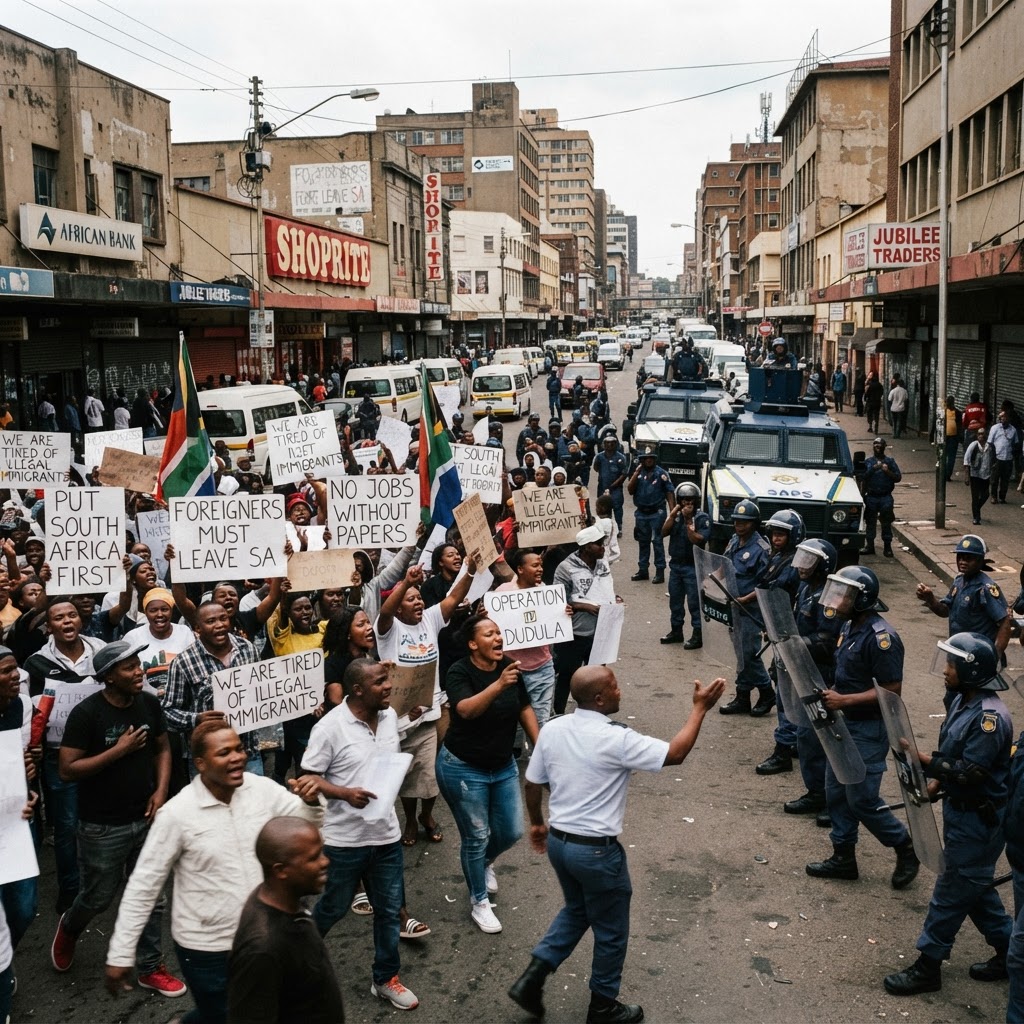
South Africa is confronting unrest tied to migration, crime, and weak growth
South Africa’s current moment has been marked by anti-immigration unrest and the broader social anger surrounding jobs, crime, and economic stagnation. Reuters reported that protests against migrants risk economic blowback, and also documented door-to-door intimidation campaigns and mass arrests as police moved to contain the disorder. BBC coverage has likewise focused on a government crackdown on undocumented migration after widespread unrest.
This is a dangerous mix because it fuses economic frustration with identity politics and public fear. South Africa’s institutions are under pressure to uphold order without deepening division, while political leaders face growing scrutiny over unemployment, state capacity, and the credibility of long-promised reform. What happens next will say a great deal about whether the country can manage social anger without allowing it to harden into a wider crisis.
DR Congo remains one of the continent’s gravest humanitarian and security emergencies
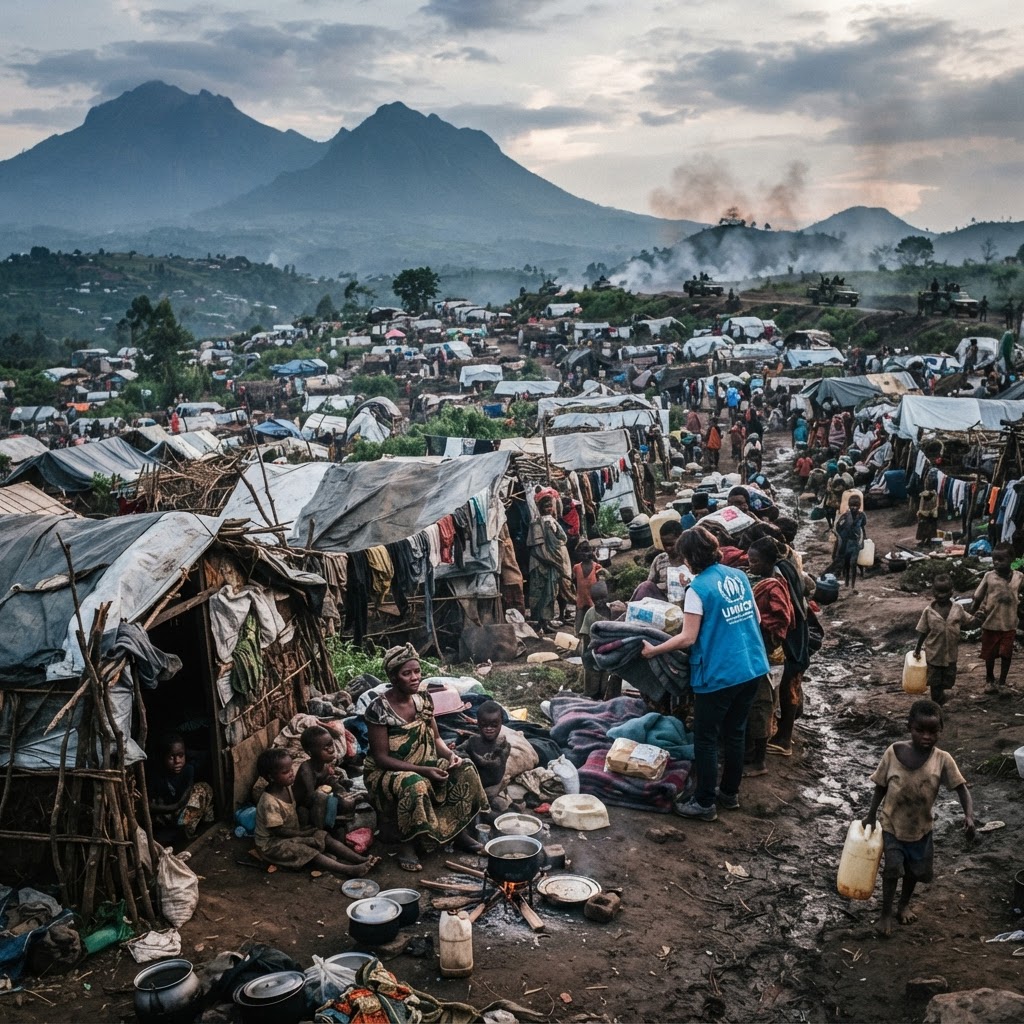
The Democratic Republic of Congo, especially the east, remains trapped in a worsening conflict and humanitarian crisis. UN News recently warned that the use of explosive weapons in eastern DR Congo must stop, citing intensified clashes involving the Congolese army and M23 fighters in South Kivu and the use of armed drones and heavy weapons. Human rights reporting has also continued to underline how violence and displacement have deepened civilian suffering.
DR Congo’s tragedy is not only a security story. It is a human story of families uprooted, communities exposed to repeated trauma, and a state struggling to protect people in the face of armed confrontation, regional tension, and fragile infrastructure. The scale of the emergency is one reason the country remains central to any honest reading of Africa’s current affairs. It is a reminder that the continent’s most urgent stories are often measured not just in headlines, but in how many civilians are left carrying the heaviest burden.
Why this Africa roundup matters now
Looked at together, Nigeria, Kenya, South Africa, and DR Congo show that Africa’s current events are not moving along a single track. Some states are grappling with inflation and reform credibility. Others are facing cycles of protest, social fracture, or armed violence. But the common thread is pressure: pressure on governments, pressure on institutions, and pressure on ordinary people trying to navigate uncertain times.
That is why these stories deserve close attention. They are not isolated national episodes. They are part of a wider African reality in which economics, security, democracy, and public trust are colliding at once — and where the decisions made now will shape the continent’s political direction well beyond this month.
Reporting context for this roundup draws on recent coverage from Reuters, BBC News, and UN News.
Comments (0)
Be the first to share your thoughts!
Your voice matters. Every comment helps build our community.
Discussion Starters
No comments yet. Be the first to share your thoughts!