




A War of Drones Has Produced an Extraordinary Energy Reversal
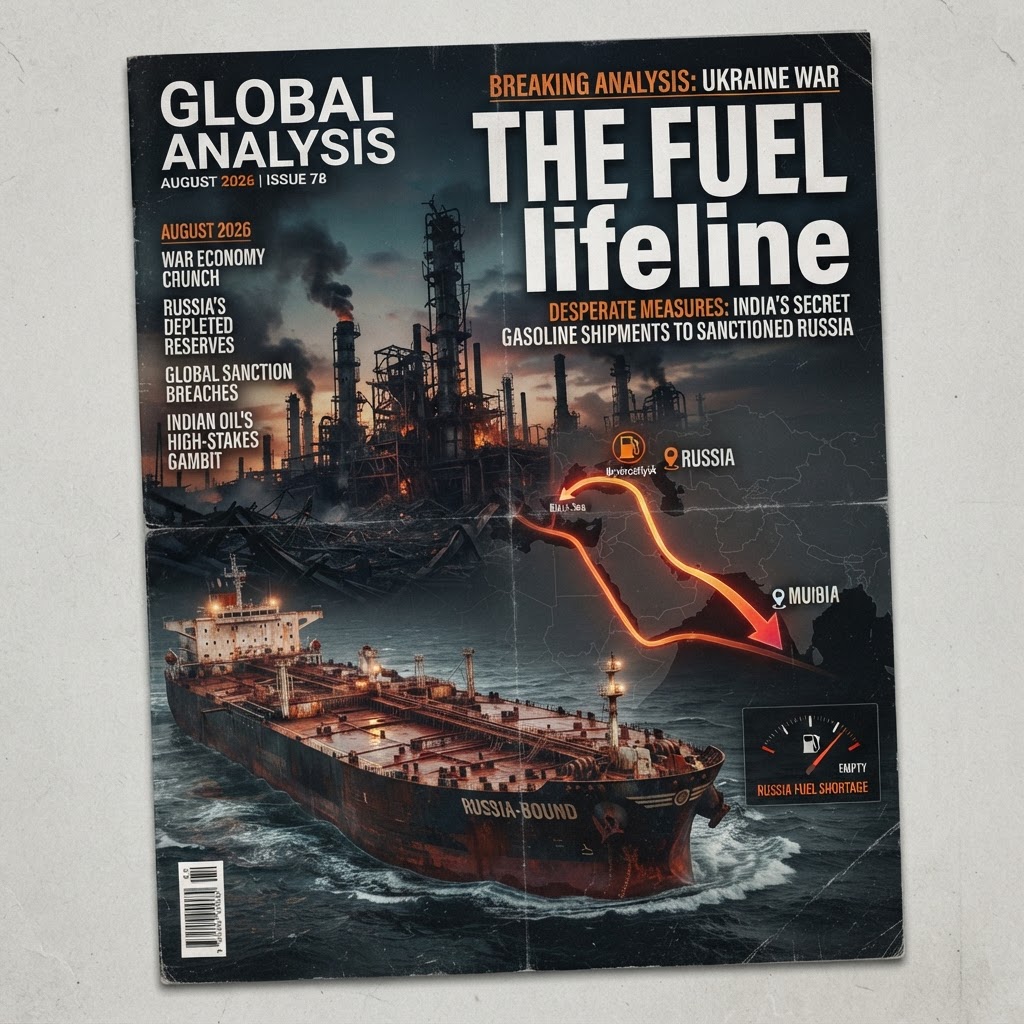
One of the most startling side effects of the Russia-Ukraine war is now visible in the fuel trade itself: Russia, one of the world's biggest oil producers and a long-time supplier of crude to India, has been forced to turn back to the Indian market for gasoline.
That reversal is not the result of sanctions alone or routine trade arbitrage. It is the product of Ukraine's persistent campaign against Russian refineries — a strategy aimed not only at hurting Moscow's export machine, but at choking the domestic fuel system that helps sustain the war.
How Ukraine Changed the Energy Battlefield
Reuters reported in July that top Russian energy companies approached Indian refiners for more gasoline after Ukrainian strikes knocked out a significant portion of Russia's refining capacity. According to one source cited by Reuters, nearly 40% of that capacity was unlikely to return for at least two months if no further attacks occurred.
That is a remarkable measure of disruption for a country built around energy power. The Ukrainian campaign has targeted the refining side of Russia's oil business — the part that turns crude into usable fuels such as gasoline, diesel and jet fuel. Even if Russia still pumps oil, damaged refineries mean less usable fuel for transport networks, regional economies and military logistics.
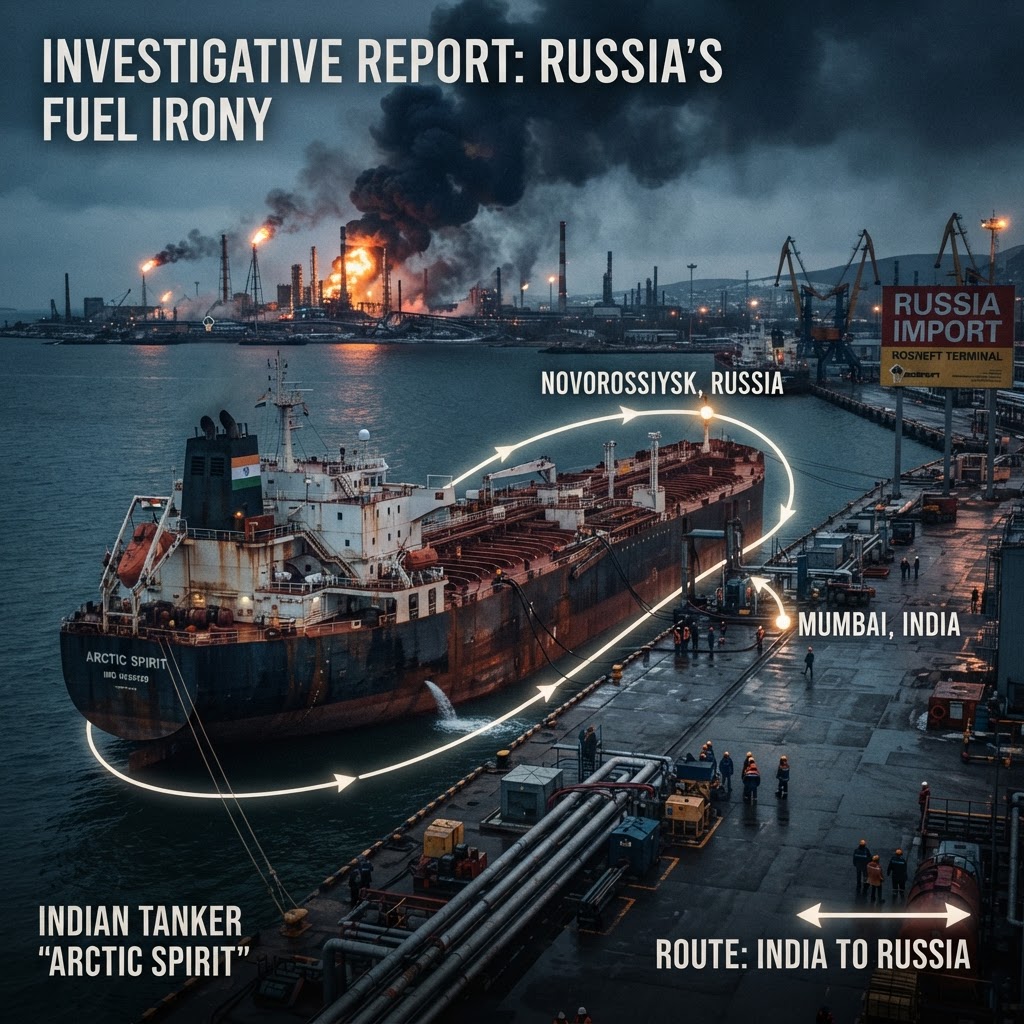
Reuters also reported that at least one cargo of Indian gasoline had already sailed to Russia, with more expected. Later reporting showed Russia drawing in additional refined fuel cargoes from elsewhere, including South Korea, as the pressure on its energy infrastructure continued.
The Irony Is Hard to Miss
The geopolitical irony is severe. India has been one of the biggest buyers of Russian seaborne crude since the West moved to curb Moscow's energy revenues. In effect, Russia sold crude into a market like India — and then, after Ukrainian strikes damaged Russian refining capacity, found itself needing fuel linked to that same external market.
This is what makes the story so striking. A country that has long projected energy abundance is now being pushed into fuel assistance patterns more commonly associated with states under acute wartime strain.
That does not mean Russia is out of oil. It means something more strategically embarrassing: it is struggling to convert enough of its own oil into enough of its own fuel.
The Shortages Are No Longer Theoretical
Reuters reported that Russian authorities were rerouting fuel supplies from Siberia and ramping up imports from Belarus to protect the Moscow region from shortages as disruptions spread across the country's 11 time zones. That is a sign of a system under operational pressure, not just a one-off supply hiccup.
The Kremlin still has options — internal redistribution, imports, export controls and state-directed emergency management. But each of those responses tells the same story: Ukraine's attacks are forcing Russia to spend time and political capital managing internal vulnerability rather than simply projecting strength outward.
India’s Position Is Awkward and Increasingly Delicate
For India, the situation is diplomatically uncomfortable. New Delhi has built a pragmatic energy relationship with Moscow, especially through discounted crude purchases, but it is also deeply sensitive to the safety of commercial shipping and civilian crews affected by the war.
India has already raised sharp concerns over deadly attacks involving Indian seafarers in the Black Sea. That broader concern over safe maritime passage gives added weight to any fuel-linked voyage near the conflict zone: what may be a commercial or humanitarian necessity for one side is also a navigation and diplomatic risk for everyone involved.
The result is an unusual triangle of pressure. Ukraine is trying to keep degrading Russia's war-enabling infrastructure. Russia is trying to plug the resulting fuel gaps. India is left navigating the political cost of helping sustain trade with a partner that once seemed energy-inexhaustible.
Why This Matters Beyond One Cargo
The larger significance is military and symbolic.
Militarily, refinery strikes are proving that Ukraine can create real downstream pain inside Russia without needing to match Moscow tank for tank or shell for shell. Symbolically, forcing Russia to import fuel from partners and traders undercuts the image of self-sufficiency that has long accompanied Russian energy power.
This is why the story matters. It shows that Ukraine's campaign is not only about spectacle or isolated fires. It is reshaping supply chains, trade flows and wartime psychology.
A Stunning Reversal of Roles
For years, the energy relationship ran in one direction: Russia supplied crude and markets like India bought it. Now, because Ukraine has kept hitting the refining system that turns crude into usable fuel, the relationship is partly reversing.
That is the stunning part of the moment. One of the world's largest fuel-producing powers is now relying on outside help to cover a shortage caused by wartime damage on its own soil.
And if Ukraine keeps degrading Russia's refineries, that reversal may become not a curiosity, but a defining measure of how deeply the war is reaching into the Russian state.
Source note: This article is based on Reuters reporting from July and August 2026 on Russia's fuel shortages, India-linked gasoline cargoes, refined-fuel shipments to Russia, and the impact of Ukrainian strikes on Russian refinery capacity.

Comments (0)
Be the first to share your thoughts!
Your voice matters. Every comment helps build our community.
Discussion Starters
No comments yet. Be the first to share your thoughts!