




Europe’s Reset Is No Longer Just About Brexit
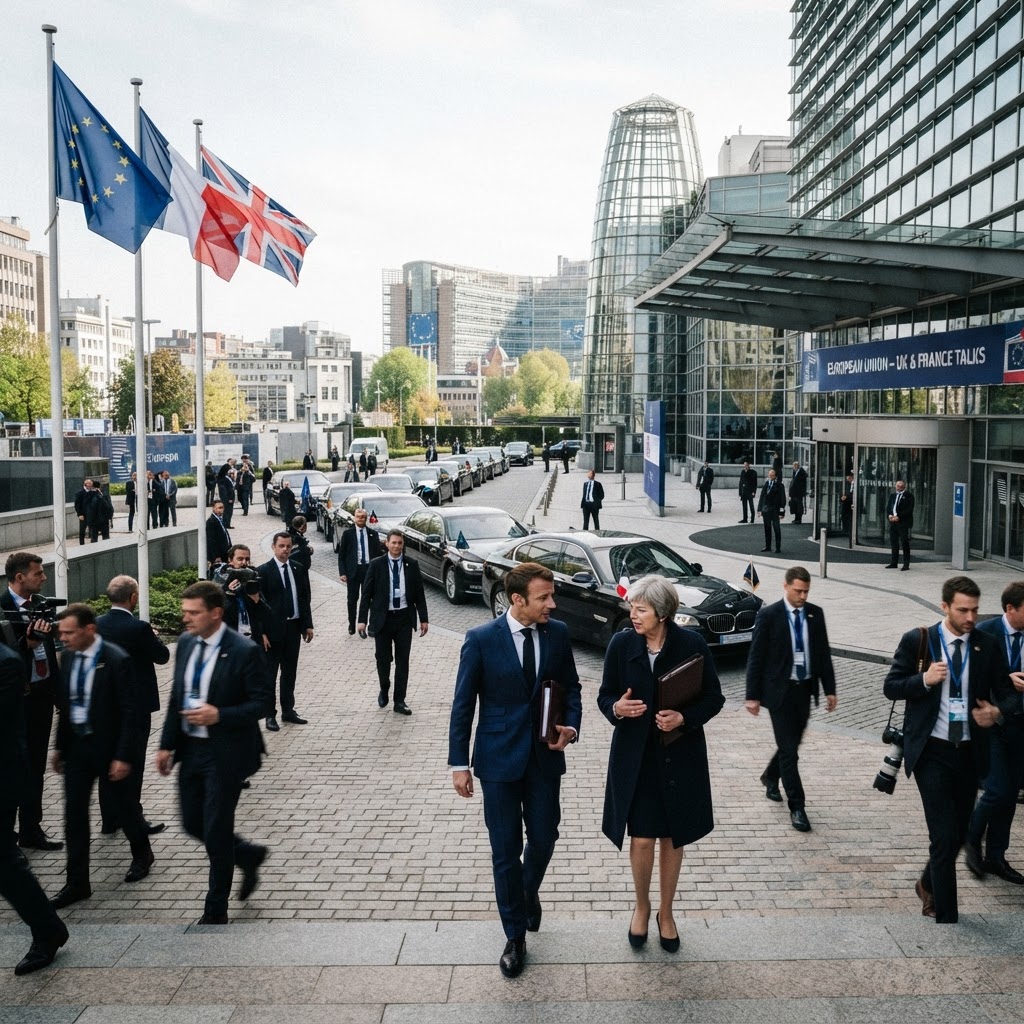
The relationship between the European Union and Britain is entering a new phase, and France is increasingly central to what comes next.
Recent Reuters reporting shows a broader European effort to tighten cooperation on security, defence, migration and trade, with London seeking closer ties to Brussels and Paris arguing that Europe must act more strategically in a far less stable world.
That does not amount to a return to the pre-Brexit order. But it does reflect a growing recognition across Europe that the continent’s biggest challenges now leave little room for political distance.
Why France Matters in the New European Equation
France has taken a more assertive role in shaping the conversation about Europe’s future security posture.
Reuters reported in July that President Emmanuel Macron warned against fragmented national defence strategies, arguing that Europe should build stronger common capabilities rather than allowing each country to go its own way. His position fits a longer-running French view that Europe needs more strategic weight of its own, even while remaining anchored inside NATO.
That message has gained urgency as Russia’s war in Ukraine continues, U.S. strategic commitments appear less predictable, and European governments face pressure to raise defence spending while protecting growth at home.
For Paris, the question is no longer whether Europe should coordinate more closely, but how quickly it can do so without splintering politically.
Britain Wants a Practical Reset With the EU
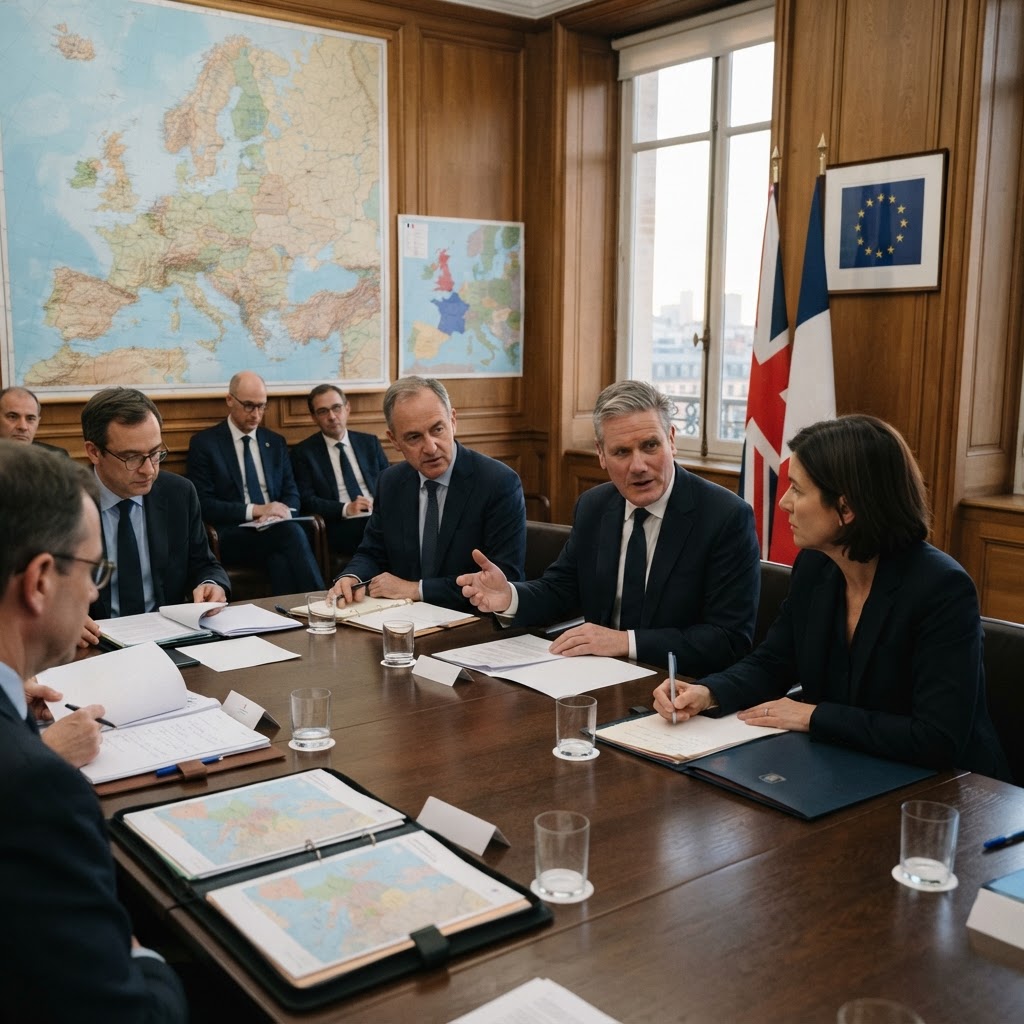
On the British side, Reuters reported earlier this summer that London and the EU planned a second summit focused on trade, security and economic cooperation as Britain tried to deepen its post-Brexit relationship with the bloc.
That matters because the debate in 2026 is no longer centered only on whether Brexit was right or wrong. It is increasingly about what kind of working relationship Britain and the EU can build under real-world pressure — from war, migration flows, industrial competition and energy vulnerability.
The practical agenda includes areas such as standards, border management, steel tariffs, food rules, defence coordination and broader resilience planning.
Migration Still Tests the Relationship
One of the sharpest pressure points remains migration.
Britain’s arrangements with France on Channel crossings and asylum returns have shown how closely the two countries still depend on one another, even after Brexit. At the same time, the EU has been rolling out tougher migration rules of its own, emphasizing stricter border controls, faster processing and more coordinated tracking systems.
That means France sits at the intersection of two overlapping political pressures: managing its own border role inside the EU framework while also working directly with Britain on one of the most politically sensitive issues in both countries.
The Biggest Obstacle: Trust
Even with warmer language and more frequent summits, trust remains limited.
Reuters noted in June that, ten years after the Brexit vote, much of the open hostility between London and Brussels has eased, but the relationship is still constrained by old disputes and new political risks. Leaders have to navigate not only policy disagreements, but also the rise of populist and far-right forces in Britain, France and elsewhere in Europe.
That makes every new agreement more fragile. A closer relationship may be necessary, but it is still politically delicate.
What This Means for Europe Now
The deeper story is that Europe’s strategic map is being redrawn by events rather than ideology.
France wants a more capable Europe. The EU wants more coordinated security and economic resilience. Britain wants a more useful and less antagonistic relationship with the bloc. None of those goals fully erase Brexit, and none of them solve Europe’s internal divides. But together they point toward a more pragmatic era.
The result is not a dramatic reunion. It is something more measured: a harder, more transactional reset shaped by defence needs, migration pressure and the reality that Europe’s major powers can no longer afford to operate at arm’s length.
Source note: This article is based on Reuters reporting published in 2026 on EU-UK summit planning, France’s push for stronger European defence coordination, Brexit’s long shadow over EU-Britain ties, and Europe’s tougher migration framework.




Comments (0)
Be the first to share your thoughts!
Your voice matters. Every comment helps build our community.
Discussion Starters
No comments yet. Be the first to share your thoughts!