




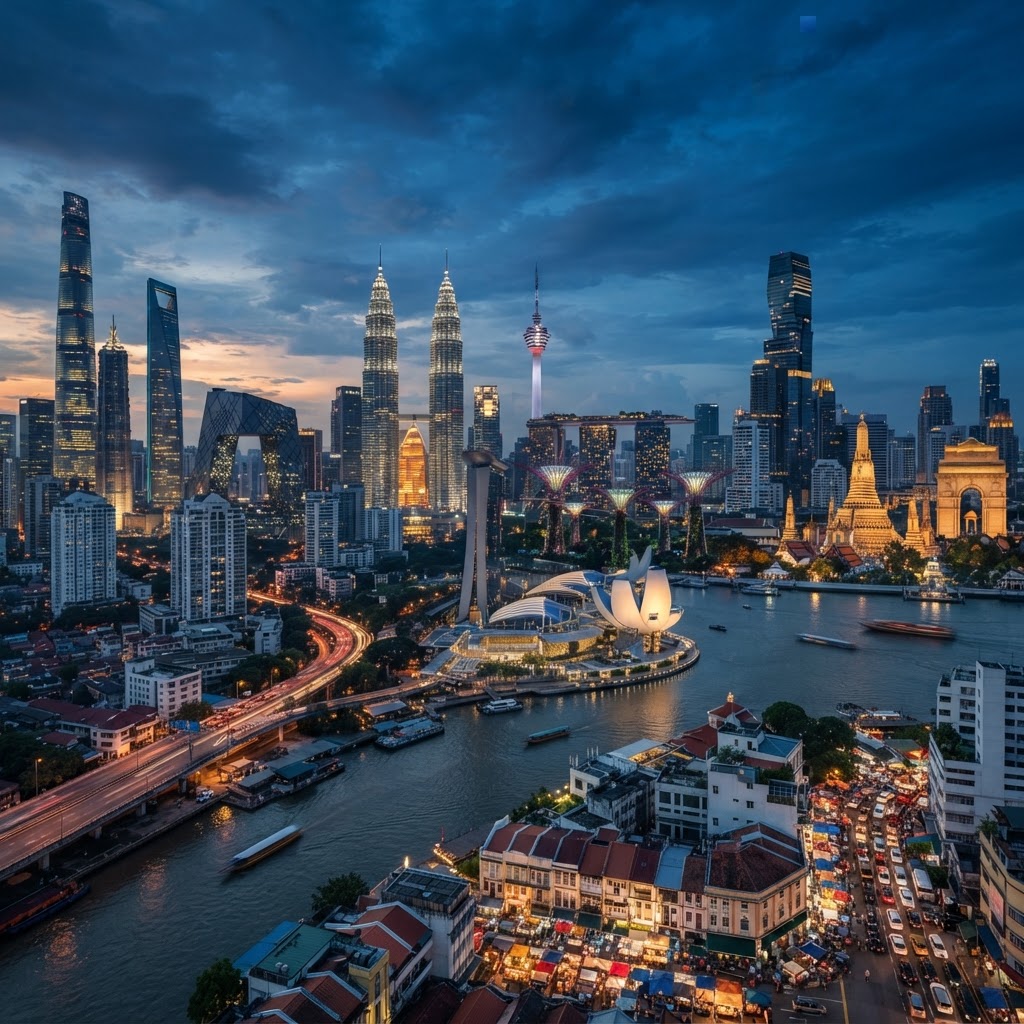
Asia Watch: China, India, Malaysia, Singapore and Thailand Confront a High-Stakes Week
Asia is closing the week with a sharp mix of political pressure, climate disruption and economic recalibration.
I treated your request as a regional Asia roundup focused on China, India, Malaysia, Singapore and Thailand. Across those countries, the common thread is resilience: governments are responding to sudden shocks, trying to protect growth and managing public pressure in very different ways.
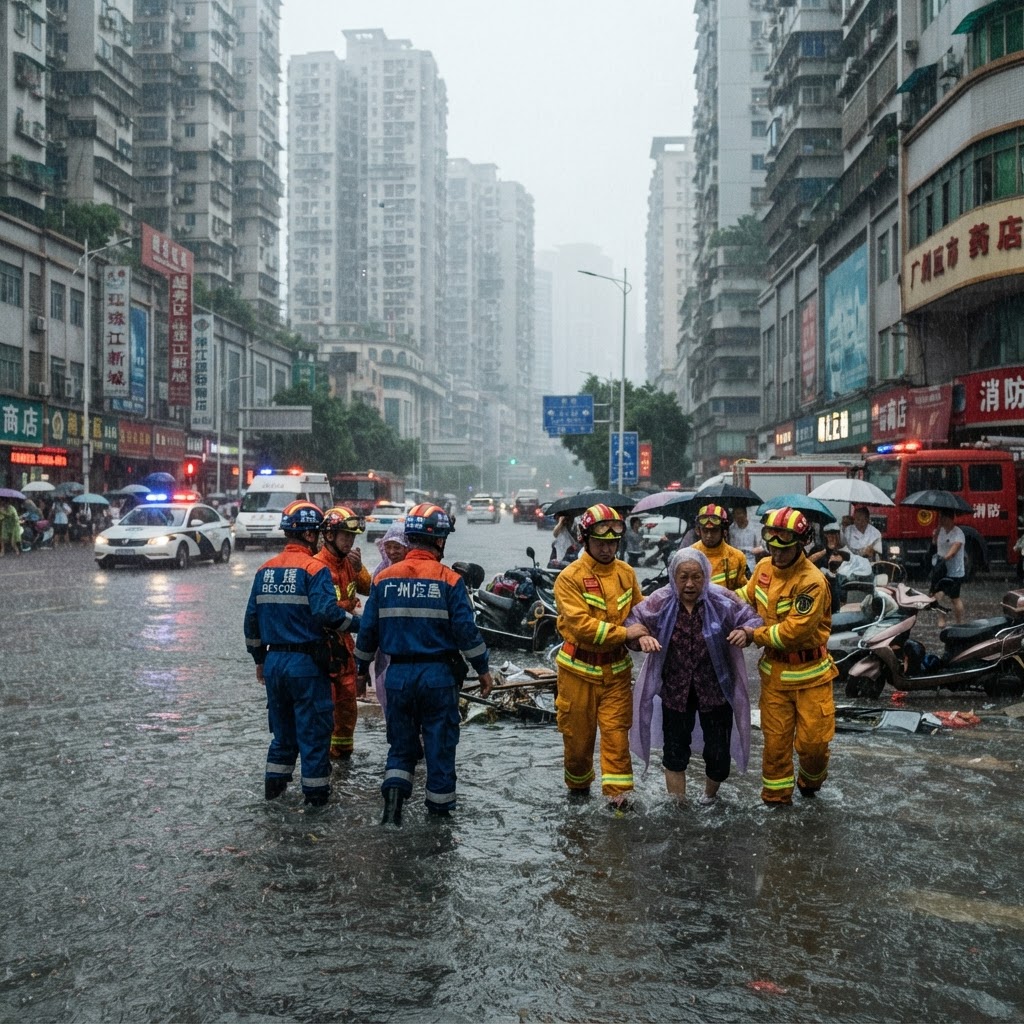
China faces typhoon disruption and flood danger
China is dealing with one of the region's most immediate emergencies after Typhoon Noul swept into the south, bringing gale-force winds and heavy to torrential rain across Guangdong and nearby Hong Kong.
Authorities issued the country's highest-level alert for flash floods in several provinces, and more than 700,000 people were relocated in Guangdong alone. Officials warned that rain and flood risks would persist as the storm moved inland, with local governments told to monitor mountain zones, rivers, construction areas and transport links.
The developments underline a broader reality for China in 2026: extreme weather is no longer an isolated event but a recurring national stress test with major economic and human consequences.
India's youth protest movement forces a political climbdown
In India, the biggest immediate story is political. Weeks of youth-led protests over leaked national exam papers ended in celebration after Education Minister Dharmendra Pradhan resigned and Prime Minister Narendra Modi's government accepted the protesters' main demands.
The demonstrations had become the most serious youth challenge to Modi since he took office in 2014. Protest leaders said the government agreed to exam reforms, the dropping of police cases tied to the protests and compensation for families affected by the scandal.
The episode matters well beyond one ministry resignation. It exposed deep frustration over jobs, fairness and accountability, and showed how youth pressure can quickly become a national political force.
Singapore stays steady, but watches inflation closely
Singapore, by contrast, is managing risk through caution rather than confrontation. Analysts expect the Monetary Authority of Singapore to keep policy unchanged, arguing that inflation remains manageable even though energy costs remain elevated.
The city-state has posted stronger-than-expected growth, supported in part by AI-related chip demand, but policymakers are still watching imported inflation, electricity costs and weather-related supply disruptions. In other words, Singapore's economy remains comparatively strong, yet its leaders are not treating that strength as a reason for complacency.
That posture reflects Singapore's role as a regional signal. When it turns more careful on inflation, trade and energy, the wider region tends to pay attention.
Malaysia focuses on energy stability and food security
Malaysia's challenge is less about immediate upheaval and more about sustained pressure. Officials say global energy price and supply instability could continue to affect the country for another year or two, even if markets begin to stabilise later in 2026.
The government has responded with fuel and food security measures, extra support for smaller businesses and subsidy adjustments designed to limit the impact on households. Ministers say inflation remains modest and domestic demand is still providing support, but the underlying message is clear: Malaysia is preparing for a long stretch of external volatility rather than a quick return to normal.
Thailand looks for a stronger growth path
Thailand is trying to project a longer-term economic vision despite a difficult global backdrop. The government says it wants to lift the country's annual growth potential to 3% by 2030 from 2.7%, relying on investment, trade, tourism, agriculture, research and business reform.
That ambition comes as Thailand still faces softer near-term forecasts and pressure from higher energy costs and weaker global conditions. Officials are combining long-range growth planning with immediate consumer support, including a major subsidy scheme aimed at easing the cost of living.
For Bangkok, the task is not just to recover momentum but to convince investors and households that the country's growth model can be strengthened despite regional turbulence.
The bigger regional picture
Taken together, the latest headlines show a region being shaped by three overlapping pressures.
First, climate shocks are becoming central economic and political events, not side stories, as seen in southern China.
Second, public frustration over governance and opportunity can escalate quickly, as shown by India's youth movement.
Third, Southeast Asian governments from Singapore to Malaysia and Thailand are increasingly preoccupied with the same strategic problem: how to preserve stability and growth in a world of energy volatility, geopolitical friction and uneven demand.
That is why this week's Asia news matters. It is not just a collection of national developments. It is a snapshot of a region under pressure, adjusting in real time and trying to stay ahead of the next shock.
This roundup is based on recent reported developments across China, India, Malaysia, Singapore and Thailand.



Comments (0)
Be the first to share your thoughts!
Your voice matters. Every comment helps build our community.
Discussion Starters
No comments yet. Be the first to share your thoughts!