





African Liberation Day, May 25
Every year on May 25, Africa once paused to celebrate a dream. It was more than a holiday. It was a call to conscience, a rallying cry for freedom, and a declaration of solidarity among African peoples. Across the continent, students organized programs, sang liberation songs, recited poetry, waved flags, and shouted battle cries in support of their brothers and sisters living under colonial rule and apartheid. Tears flowed not from weakness, but from a shared determination that no African nation would remain in chains.
African Liberation Day symbolized a united continent committed to ending foreign domination. It inspired generations to believe that freedom was not only possible but inevitable.
Few nations contributed more to that struggle than Liberia and Ethiopia. Under President William V. S. Tubman, Liberia became one of the leading voices for African independence. Tubman was more than a statesman; he was a champion of African liberation. In international halls of power, he consistently advocated for the freedom of African nations still under colonial rule. Beyond diplomacy, Liberia quietly provided financial assistance, political support, diplomatic advocacy, and educational opportunities to liberation movements throughout the continent.
Scholarships were extended to future African leaders and freedom fighters, including Kwame Nkrumah of Ghana, Nnamdi Azikiwe of Nigeria, Patrice Lumumba of Congo, and many others who would later lead their nations to independence. Liberia stood firmly behind the dream of a free Africa, helping to nurture the very leaders who would dismantle colonial rule across the continent.
The struggle eventually achieved its objective. One by one, African nations gained independence. The collapse of apartheid in South Africa marked the final chapter of formal colonial domination on African soil. The dream that had united generations of Africans had become reality.
Africa was politically free.
Yet today, as we commemorate African Liberation Day, a difficult but necessary question confronts us:
What has become of that freedom?
The tragedy of modern Africa is that many of its greatest obstacles are no longer foreign powers. They are self-inflicted wounds. They are failures of governance, accountability, leadership, and citizenship.
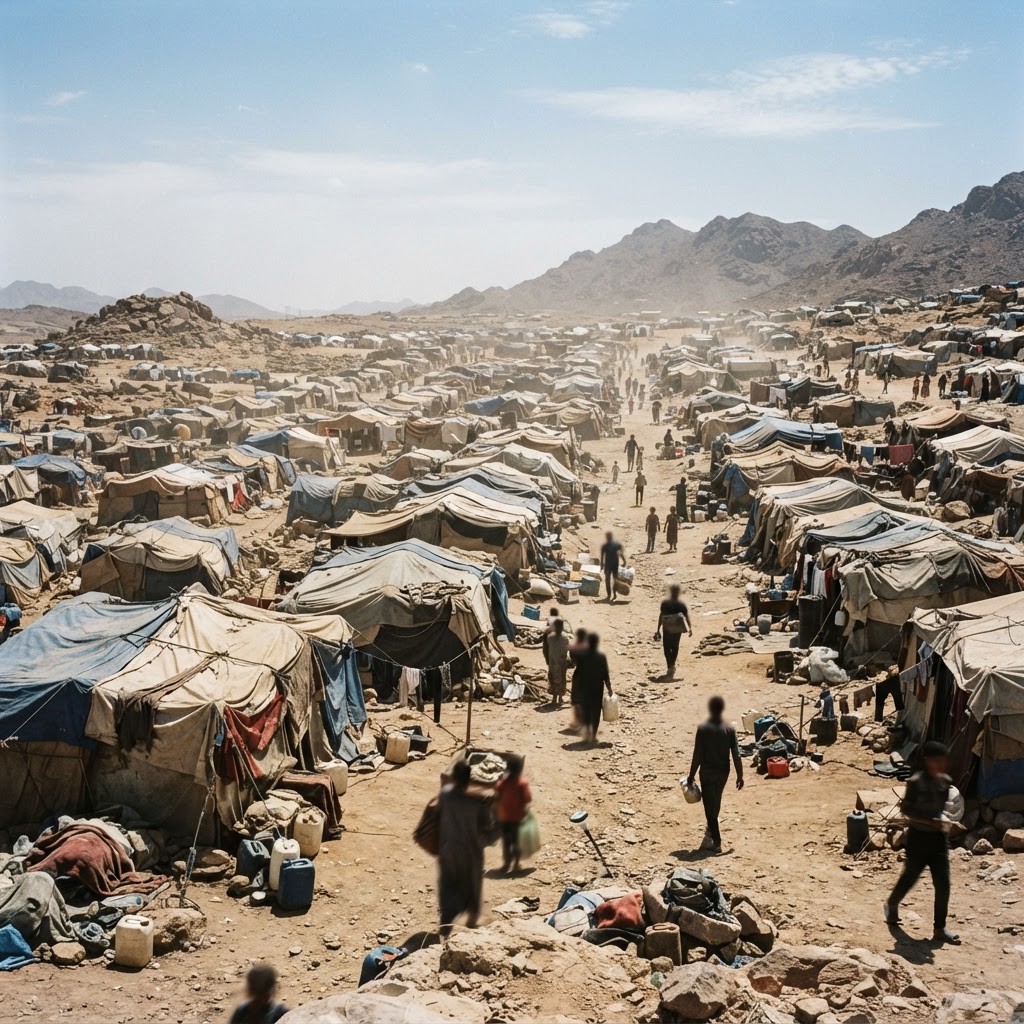
Across much of the continent, citizens continue to endure poverty amidst abundance. Nations blessed with immense natural resources remain trapped in underdevelopment. Public funds intended for schools, hospitals, roads, electricity, and economic opportunity too often disappear into private accounts. While millions struggle to secure a daily meal, some political leaders accumulate extraordinary wealth, purchase luxury properties abroad, and send their children to the world's finest schools—opportunities unavailable to the citizens whose resources financed those privileges.
The contradiction is impossible to ignore. Countries rich in minerals, oil, fertile land, and youthful talent remain poor because institutions are weak and corruption is strong.
The painful reality is that in many places, African citizens suffer exploitation not from colonial governors but from their own leaders. Too many governments have become systems of extraction rather than instruments of development. Public office is viewed as an opportunity for personal enrichment rather than public service. The result is visible everywhere: failing infrastructure, poor educational systems, inadequate healthcare, youth unemployment, and declining public trust.
Meanwhile, the world races forward.
Humanity is entering a new era driven by artificial intelligence, advanced technology, automation, biotechnology, and digital innovation. Nations that invest in education, research, technology, and entrepreneurship are positioning themselves to dominate the future. Yet many African countries continue to neglect the very sectors that will determine global competitiveness in the twenty-first century.
The continent possesses one of the youngest populations on Earth—a demographic advantage that could transform Africa into a global economic powerhouse. Instead, millions of young Africans face unemployment, poor educational opportunities, inadequate healthcare, and limited prospects for advancement. The years they should spend building productive lives and prosperous families are too often consumed by hardship and uncertainty.
Africa's greatest treasure is not its oil, diamonds, gold, cobalt, timber, or fertile land.
It is its people.
Particularly its youth.
Yet every year that potential is wasted through poor governance, failed policies, and leadership incapable of preparing nations for the future.
For decades, many Africans have blamed the continent's difficulties primarily on colonialism, foreign interference, and external exploitation. History undoubtedly left deep scars whose effects remain visible today. But history alone cannot explain present failures. No nation can build a prosperous future while refusing to confront its own shortcomings.
The uncomfortable truth is that Africa's future depends increasingly on Africans themselves.
Democracy cannot succeed if citizens repeatedly reward incompetence, corruption, tribalism, and empty promises. Progress cannot occur if elections become transactions in which votes are exchanged for temporary gifts while long-term national interests are sacrificed. Nations cannot move forward when their most capable minds are ignored while leadership remains concentrated among individuals disconnected from the realities of the modern world.
Too often, African voters elect leaders who belong to another era—leaders older than the space age, older than the internet revolution, and now attempting to govern in the age of artificial intelligence. Many lack understanding of the technologies, economic strategies, and governance models required to compete in today's world. Yet citizens repeatedly place their future in the hands of individuals ill-equipped to lead modern nations.
This cycle continues because many citizens have surrendered responsibility for their own future. During election seasons, they accept temporary handouts, tribal appeals, political slogans, and empty promises from leaders who later govern in their own interests. They sell tomorrow for today and then wonder why tomorrow never arrives.
The result is a vicious cycle of disappointment, underdevelopment, and lost opportunity.
The Second African Liberation Agenda
If Africa is to liberate itself from the failures that now hold it back, criticism alone is not enough. The continent must embrace a new liberation agenda—one focused on building prosperous, accountable, and modern nations capable of competing in the twenty-first century.
First, Africa must place education at the center of national development. Every child should have access to quality education, with special emphasis on science, technology, engineering, mathematics, entrepreneurship, and artificial intelligence. The future belongs to nations that create knowledge, not merely consume it.
Second, corruption must become politically and socially unacceptable. Anti-corruption institutions must be independent, public finances transparent, and those who steal from the people prosecuted regardless of status or political affiliation. No nation can prosper when public office becomes a pathway to private wealth.
Third, merit must replace tribalism, patronage, and favoritism. Governments should recruit and promote the most competent individuals to positions of responsibility. Nations rise when talent is rewarded and decline when mediocrity is protected.
Fourth, Africa must empower its youth. Young people are not merely the leaders of tomorrow; they are the builders of today. Governments should invest heavily in skills development, innovation, entrepreneurship, and access to capital so that Africa's young population becomes its greatest economic asset rather than its greatest social challenge.
Fifth, democratic institutions must be strengthened. Elections must be free and credible, constitutions respected, term limits honored, and the rule of law applied equally to all citizens. Leadership should be earned through service and competence, not inherited through political networks or maintained through manipulation.
Finally, Africa must embrace the technological revolution now transforming the world. Artificial intelligence, digital infrastructure, advanced manufacturing, biotechnology, renewable energy, and modern industry must become strategic national priorities. The continent cannot afford to miss another industrial revolution.
The struggle for Africa's future will not be won on battlefields but in classrooms, laboratories, courtrooms, voting booths, boardrooms, and communities determined to build nations worthy of future generations.
The Second Liberation
The generation of Tubman, Nkrumah, Lumumba, Azikiwe, Nyerere, Kenyatta, Mandela, and countless others fought one of the greatest battles in African history. They challenged empires, endured imprisonment, sacrificed comfort, and risked their lives so that Africans could govern themselves and determine their own destiny.
They succeeded.
The colonial flags came down. Apartheid fell. Africa became politically free.
But political freedom alone does not guarantee prosperity. It does not automatically create jobs, build roads, educate children, strengthen institutions, or produce visionary leadership. Those responsibilities belong to every generation.
The liberation struggle of our time is different. Today's battle is against corruption that steals from the poor. It is against leaders who place personal wealth above national progress. It is against tribalism that divides citizens, apathy that weakens democracy, and the acceptance of mediocrity in public life. It is against the mindset that waits for others to solve problems that Africans themselves have the power to solve.
Africa stands at a crossroads. One path leads to continued dependence, declining institutions, youth unemployment, technological irrelevance, and endless excuses. The other leads to innovation, accountability, prosperity, and a future worthy of the continent's immense potential.
The choice is ours.
No foreign power can save Africa from bad governance. No international organization can substitute for responsible leadership. No donor can replace the determination of citizens committed to building strong nations. The future of Africa will not be decided in Washington, London, Paris, Moscow, or Beijing. It will be decided in Monrovia, Accra, Lagos, Nairobi, Addis Ababa, Kigali, Johannesburg, and every African town and village where citizens choose between complacency and responsibility, between excuses and action, between failure and progress.
On this African Liberation Day, let us remember the heroes who liberated the continent from foreign domination. But let us also recognize that a new liberation is required—one that begins in our minds, our institutions, our communities, and our ballot boxes.
Africa does not need another generation of rulers.
It needs a generation of builders.
It needs leaders who serve rather than steal.
It needs citizens who demand excellence rather than accept failure.
It needs young people who believe that their future is worth fighting for.
And it needs the courage to confront the truth that the greatest barriers to Africa's advancement are often the ones we have allowed to endure ourselves.
The first liberation gave Africa its freedom.
The second liberation must give Africa its future.
On this May 25, let the spirit that once united the continent against foreign domination awaken again—not against external rulers, but against corruption, complacency, failed leadership, and civic indifference. Let it inspire citizens to believe that Africa's destiny is neither predetermined nor hopeless. The continent's future remains unwritten.
The liberation Africa now requires begins not in foreign capitals, but in African minds, African institutions, African communities, and African ballot boxes.
May African Liberation Day once again become a call to conscience.
And may it remind every African that the struggle for freedom did not end when colonial flags came down—it merely entered a new chapter.
The time to begin is now.
□
By J. K. K. Peah
Publisher & Editor-in-Chief
The New Dispensation
The Truth Can't Be Hidden
Comments (0)
Be the first to share your thoughts!
Your voice matters. Every comment helps build our community.
Discussion Starters
No comments yet. Be the first to share your thoughts!