
**WASHINGTON D.C.** — The first weeks of February 2026 have witnessed seismic shifts across the global landscape, with the United States emerging as an unexpected leader in climate technology while traditional economic powers face unprecedented challenges.
## **America's Fusion Energy Breakthrough**

In what scientists are calling "the energy revolution of the century," the U.S. Department of Energy announced on February 8th that its Massachusetts-based fusion reactor achieved **net positive energy output for 72 consecutive hours** — a world first that could transform global energy production within the decade.
"This isn't just a scientific milestone; it's the beginning of truly unlimited clean energy," said Dr. Sarah Chen, lead physicist at the Commonwealth Fusion Systems facility. "We're looking at commercial fusion power plants by 2030."
The breakthrough has already triggered:
- **$500 billion in new private investment** commitments to fusion technology
- **15 new fusion startups** launched in Silicon Valley this week alone
- **Oil prices dropping 18%** on global markets
- **Major automakers accelerating** all-electric vehicle timelines
## **Europe's Economic Restructuring**

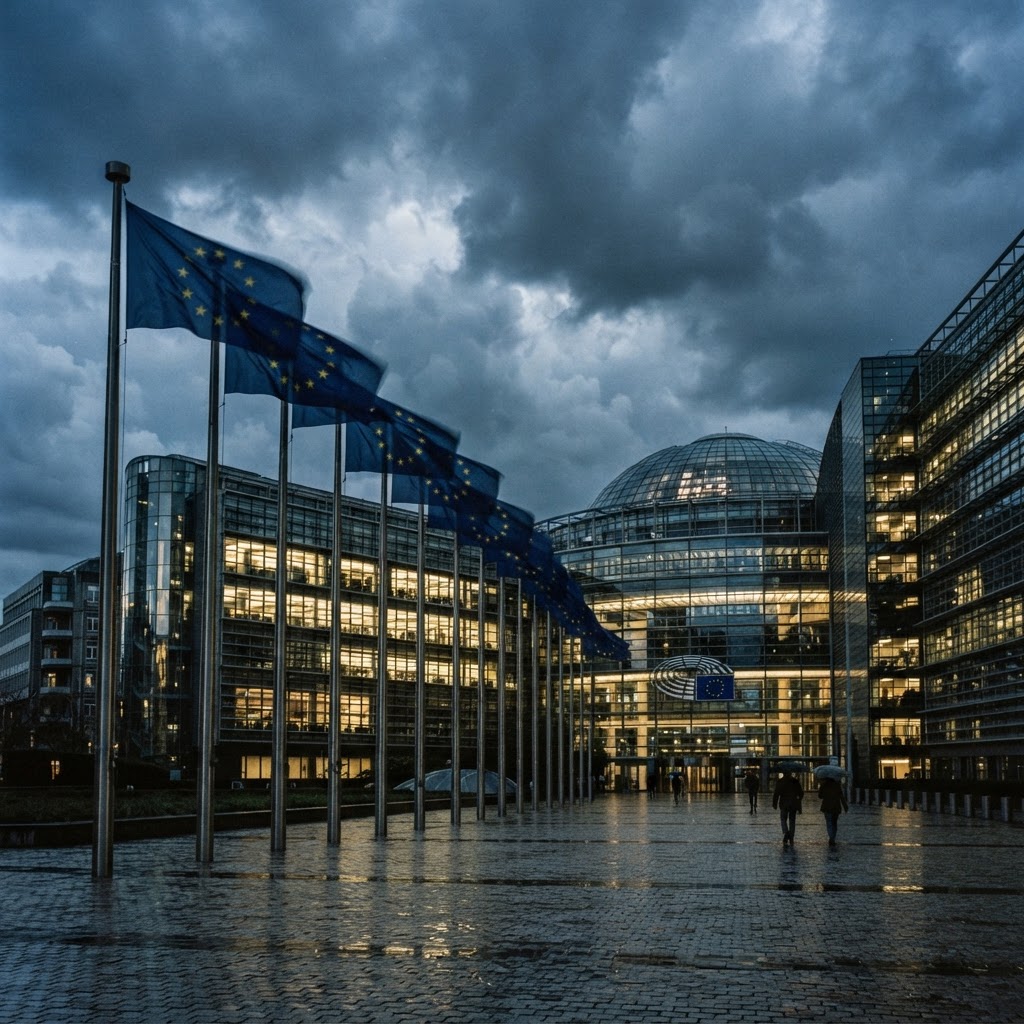
Meanwhile, Europe faces its most significant economic challenge since the 2008 financial crisis. The European Central Bank's emergency meeting on February 5th revealed concerning trends:
**The Numbers:**
- Germany's manufacturing output down **12% year-over-year**
- France facing **8.2% unemployment**, highest in a decade
- Italy's debt-to-GDP ratio reaching **156%**
- Euro weakening to **$1.03**, near parity with the dollar
"The old economic model isn't working anymore," admitted European Commission President Ursula von der Leyen. "We must adapt or risk losing our competitive edge to America and Asia."
The EU has announced a **€2 trillion restructuring package** focusing on:
- Digital infrastructure modernization
- Green technology manufacturing
- Workforce retraining programs
- Small business support
## **Asia's Tech Dominance Expands**

While Western economies navigate turbulence, Asia's technology sector continues its meteoric rise. China, Japan, and South Korea collectively now account for **67% of global semiconductor production** — up from 52% just two years ago.
**Key Developments:**
- China's AI company DeepSense unveiled **quantum computing breakthrough** on February 3rd
- Japan's SoftBank announced **$300 billion robotics investment** fund
- South Korea's Samsung revealed **3-nanometer chip mass production** ahead of schedule
- India's tech sector added **2.3 million jobs** in 2025, with projections for 3 million more in 2026
"The center of technological innovation has definitively shifted eastward," noted MIT economist Dr. Robert Huang. "American companies are now following Asian trends, not the other way around."
## **Africa's Renewable Energy Revolution**

Perhaps the most surprising development is Africa's rapid emergence as a renewable energy superpower. The continent's vast solar potential is finally being realized through massive international investment.
**Transformative Projects:**
- Morocco's Noor Energy Complex now powers **3 million homes** with concentrated solar
- Kenya's geothermal production increased **400% since 2023**
- Egypt's wind farms generate **15 gigawatts**, enough for Cairo and Alexandria combined
- South Africa's hydrogen production positioned to supply **25% of Europe's needs** by 2028
"Africa isn't just catching up; in renewable energy, we're leaping ahead," declared African Union Energy Commissioner Amani Abou-Zeid.
The renewable boom has catalyzed broader economic growth:
- **1.2 million new jobs** created in clean energy sector
- Foreign direct investment up **89% year-over-year**
- Six African nations achieving **5%+ GDP growth** in Q4 2025
## **Latin America's Political Realignment**

Latin America is undergoing its most significant political transformation in decades. Brazil, Mexico, and Argentina have formed the **Southern Alliance** — a new economic bloc designed to compete with North American and Asian trade partnerships.
"We're done being treated as junior partners," stated Brazilian President Fernando Santos at the alliance's February 1st launch. "Latin America will chart its own course."
The alliance encompasses:
- **450 million people** across 12 nations
- Combined GDP of **$6.2 trillion**
- Unified trade policies starting April 2026
- Shared currency exploration (tentatively named "Sol")
- Joint space program targeting **Mars mission by 2032**
## **Middle East Diversification Success**
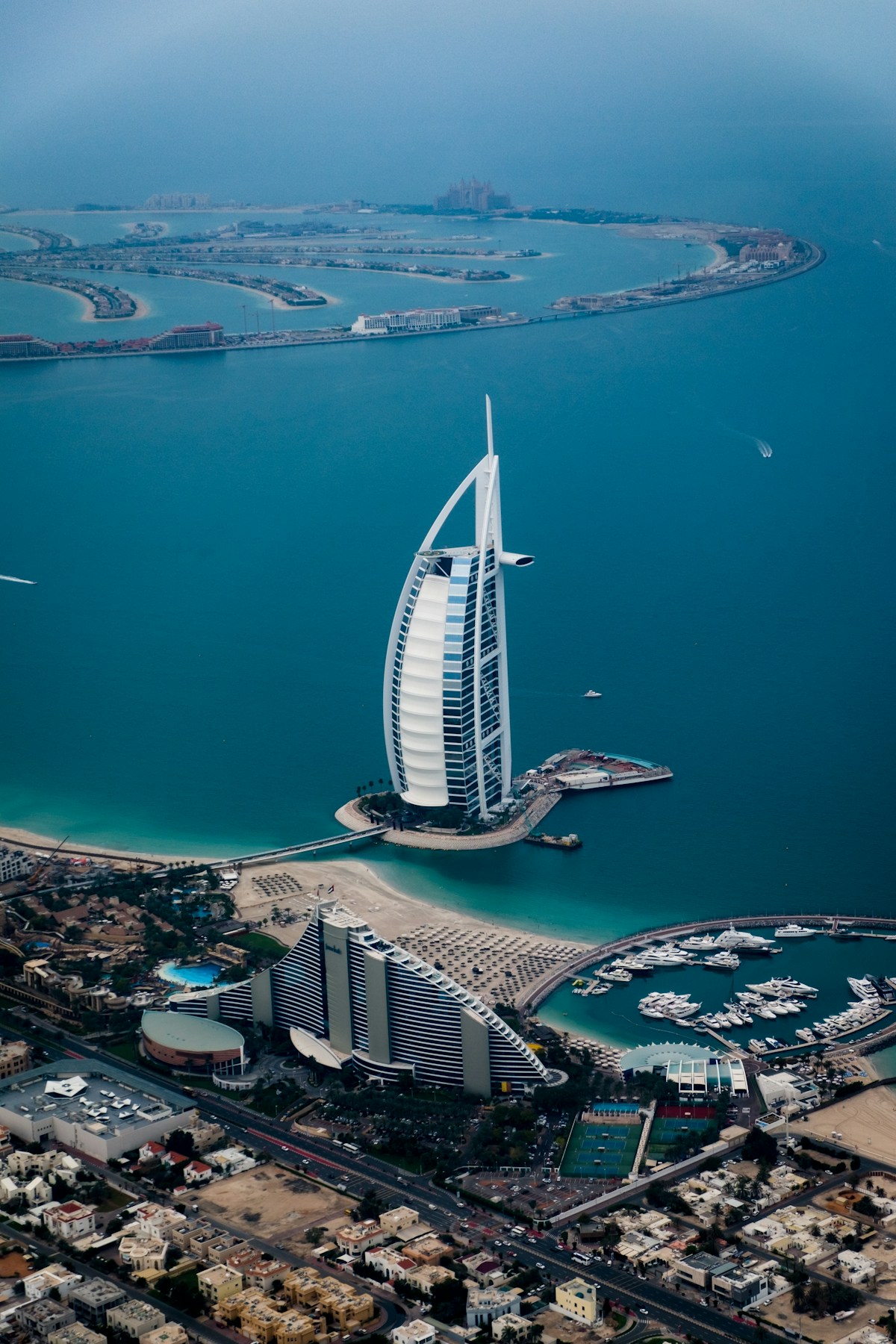
The Middle East's decade-long effort to diversify beyond oil is finally bearing fruit. Saudi Arabia's **NEOM city project** welcomed its first **100,000 residents** this month, representing 147 nationalities.
United Arab Emirates announced that **non-oil sectors now constitute 72% of GDP**, successfully transitioning to a knowledge-based economy ahead of schedule.
"The oil age is ending, and we prepared," noted UAE Minister of Economy Abdullah Al-Marri. "Technology, tourism, and finance are our future."
## **Climate Action Accelerates Globally**

The UN Climate Summit in Oslo (February 10-12) is witnessing unprecedented cooperation. For the first time, all major economies have committed to **net-zero emissions by 2040** — ten years ahead of previous targets.
**Major Commitments:**
- United States: **100% clean electricity by 2033**
- China: **Peak emissions reached in 2025**, two years early
- European Union: **80% renewable energy by 2035**
- India: **500 GW solar capacity by 2030**
"We're finally seeing the urgency match the reality," said UN Secretary-General António Guterres. "These aren't aspirational goals anymore — they're funded, planned commitments."
## **America's Domestic Transformation**

Back in the United States, the fusion breakthrough is just one part of a broader transformation:
**Infrastructure Renaissance:**
- **$2.5 trillion infrastructure package** showing visible results nationwide
- 47 new high-speed rail projects under construction
- **1,200 bridges** rebuilt or replaced since 2024
- Universal fiber internet reaching **92% of rural America**
- Electric vehicle charging stations now outnumber gas stations in 12 states
**Economic Indicators:**
- Unemployment at **3.1%**, near historic lows
- Manufacturing jobs increased by **850,000 in 2025**
- Median household income up **6.2%** after inflation
- Stock markets hitting record highs for 14 consecutive sessions
**Social Progress:**
- Life expectancy increased to **80.5 years**, reversing decade-long decline
- College enrollment up **18%** due to expanded financial aid
- Healthcare access improved with **94% coverage rate**
- Violent crime down **23%** from 2023 levels
## **Global Health Advances**

The medical field is experiencing its own revolution:
- **mRNA cancer vaccines** entering final trial phases, with approval expected by summer
- Alzheimer's treatment showing **67% effectiveness** in slowing progression
- AI-powered diagnostics detecting diseases **5 years earlier** than traditional methods
- Global malaria cases down **78%** thanks to new gene-drive mosquito interventions
"We're entering an era where aging itself may become treatable," predicted Dr. David Sinclair of Harvard Medical School.
## **Space Exploration New Era**
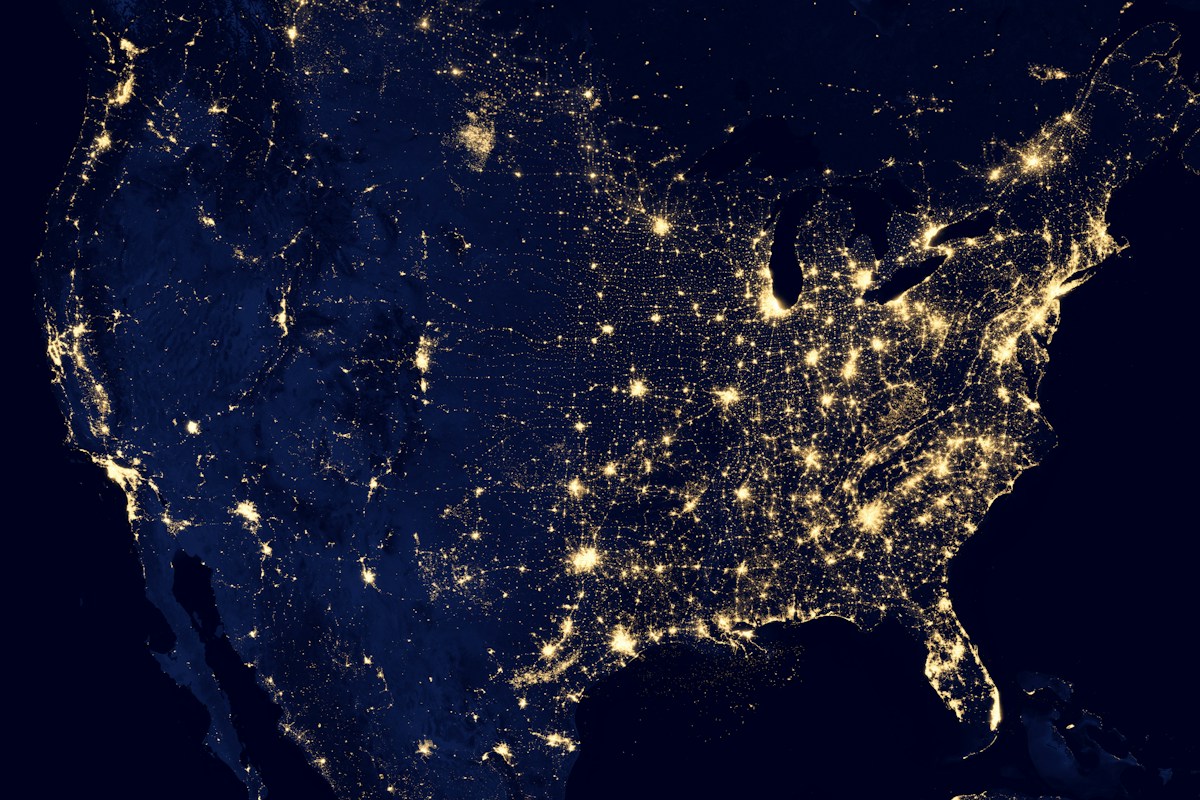
Space is no longer the exclusive domain of superpowers:
- **12 nations** now have active moon programs
- Private space industry valued at **$890 billion**
- **47 commercial satellites** launched in January alone
- Mars sample return mission launching next month
- Space tourism accessible at **$50,000 per trip**, down from $250,000 in 2023
## **Challenges Remain**
Despite progress, significant challenges persist:
**Geopolitical Tensions:**
- U.S.-China trade disputes continue
- Russian energy exports declining
- Cybersecurity threats escalating
**Social Issues:**
- Income inequality remains high in developed nations
- Migration pressures building in climate-vulnerable regions
- Disinformation campaigns undermining democratic institutions
**Environmental Concerns:**
- Arctic ice melt accelerating despite mitigation efforts
- Species extinction rates still alarming
- Ocean acidification threatening marine ecosystems
## **Looking Ahead**
As February 2026 progresses, the world stands at a crossroads. The fusion energy breakthrough could be the catalyst for unprecedented cooperation — or another source of geopolitical competition.
"The next five years will determine whether we use these technological advances to unite humanity or divide it further," warned former UN Secretary-General Ban Ki-moon.
What's certain is that the pace of change is accelerating. The developments of early February 2026 — from fusion energy to economic realignments to climate commitments — suggest we're entering a decade that will reshape human civilization as profoundly as the Industrial Revolution.
**The question isn't whether the world is changing. It's whether we're ready for how fast it's changing.**






Comments (0)
Be the first to share your thoughts!
Your voice matters. Every comment helps build our community.
Discussion Starters
No comments yet. Be the first to share your thoughts!