


A Store, a Truck and Thirty Thousand Won
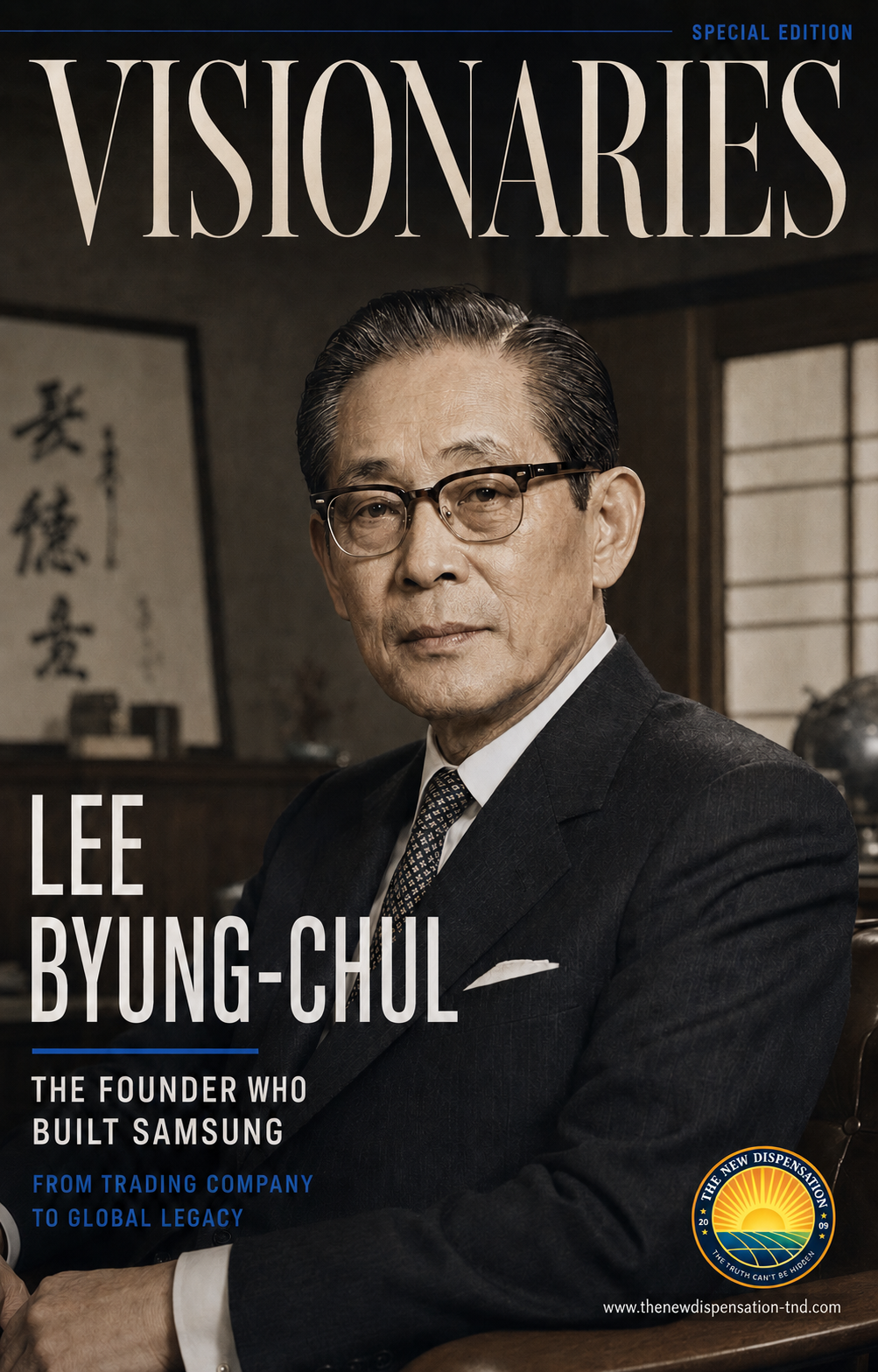
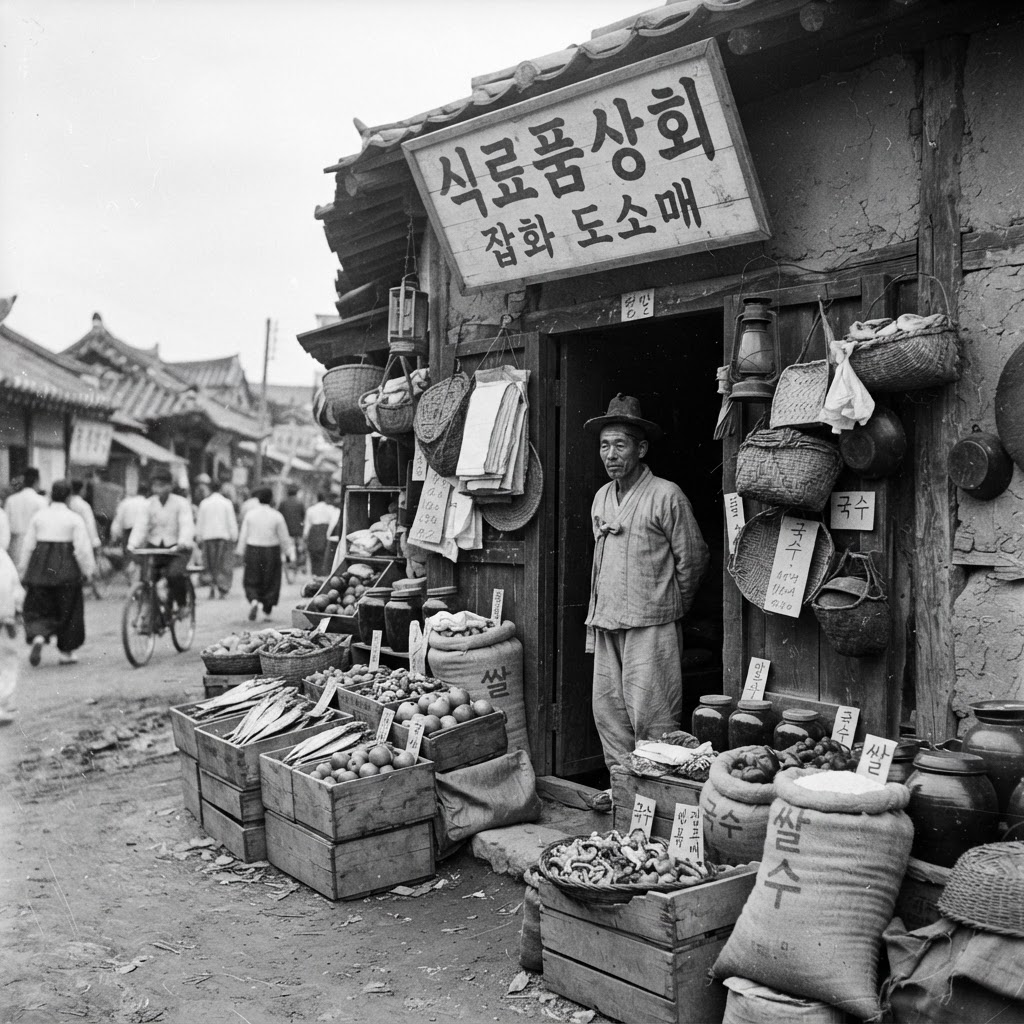
On 1 March 1938, a 28-year-old Korean businessman named Lee Byung-chul opened a small trading store in Daegu, in what was then Japanese-occupied Korea. He had about 30,000 won of capital, forty employees and a plain commercial idea: buy what Korean farmers and fishermen produced, and sell it to whoever would pay more for it.
What he traded was food. Dried fish. Fruit and vegetables. Rice, flour and noodles. He milled his own noodles on site. He loaded produce onto trucks and rail and shipped it out of Korea to Manchuria and Beijing — an exporter before he was ever a manufacturer.
He called the business Samsung. In Korean, sam means three and sung means stars: "three stars." Lee chose it deliberately. Three, in Korean tradition, signals something big, numerous, powerful. Stars signal permanence — something eternal, something that would still be shining long after he was gone.
He was a grocer naming a company as though it would outlive empires. It did.
Rebuilding From Rubble: Sugar, Wool and Insurance
The Korean War left the peninsula devastated, and Lee rebuilt by making the things his country had to import. In 1953 he opened Cheil Jedang, a sugar refinery — Korea's first. In 1954 came Cheil Industries, a wool textile mill, at the time the largest of its kind anywhere in the country.
The pattern that would define Samsung for seventy years was already visible: find the thing Korea is buying from abroad, and build it at home at scale.
Through the late 1950s and 1960s the company kept widening. Samsung moved into insurance (acquiring what became Samsung Life and Samsung Fire & Marine), retail (the Shinsegae department store), banking, fertilizer, paper and publishing, and broadcasting. By the 1960s Samsung was no longer a trading house. It was a chaebol — a sprawling, family-controlled industrial conglomerate braided into the fabric of the South Korean economy itself.
1969: The Turn to Electronics
The decisive move came in 1969, with the founding of Samsung Electronics.
It started humbly and derivatively. The first product, in 1970, was a black-and-white television — assembled largely from parts and designs licensed from Japanese partners, and initially not even sold domestically. Samsung was a contract assembler, the cheap hands at the end of somebody else's supply chain.
Throughout the 1970s it expanded the catalogue relentlessly: refrigerators, washing machines, air conditioners, microwave ovens, colour televisions. By the early 1980s Samsung had produced tens of millions of TV sets and was one of the world's largest appliance makers by volume — and still, in the eyes of Western and Japanese consumers, a maker of the affordable alternative.
Meanwhile the rest of the empire kept multiplying. Samsung Heavy Industries (1974) built ships and offshore rigs. Samsung C&T and Samsung Engineering built skyscrapers, refineries and bridges — including, later, the Burj Khalifa and Taipei 101. There were petrochemicals, aerospace and defence, medical equipment, hotels, an amusement park, advertising, fashion, a hospital, and one of Korea's largest life insurers. At its peak the group's revenues have been estimated at roughly a fifth of South Korea's entire economic output.
The Bet on Sand
In 1974, Lee Byung-chul bought a struggling company called Korea Semiconductor. Executives inside and outside the group considered it close to insane: chipmaking demanded ruinous capital, precision Korea did not yet possess, and the Americans and Japanese owned the field.
Lee's reasoning was that a country with no oil and few raw materials had exactly one exportable resource — the skill of its people — and that the highest-value expression of that skill was etched into silicon.
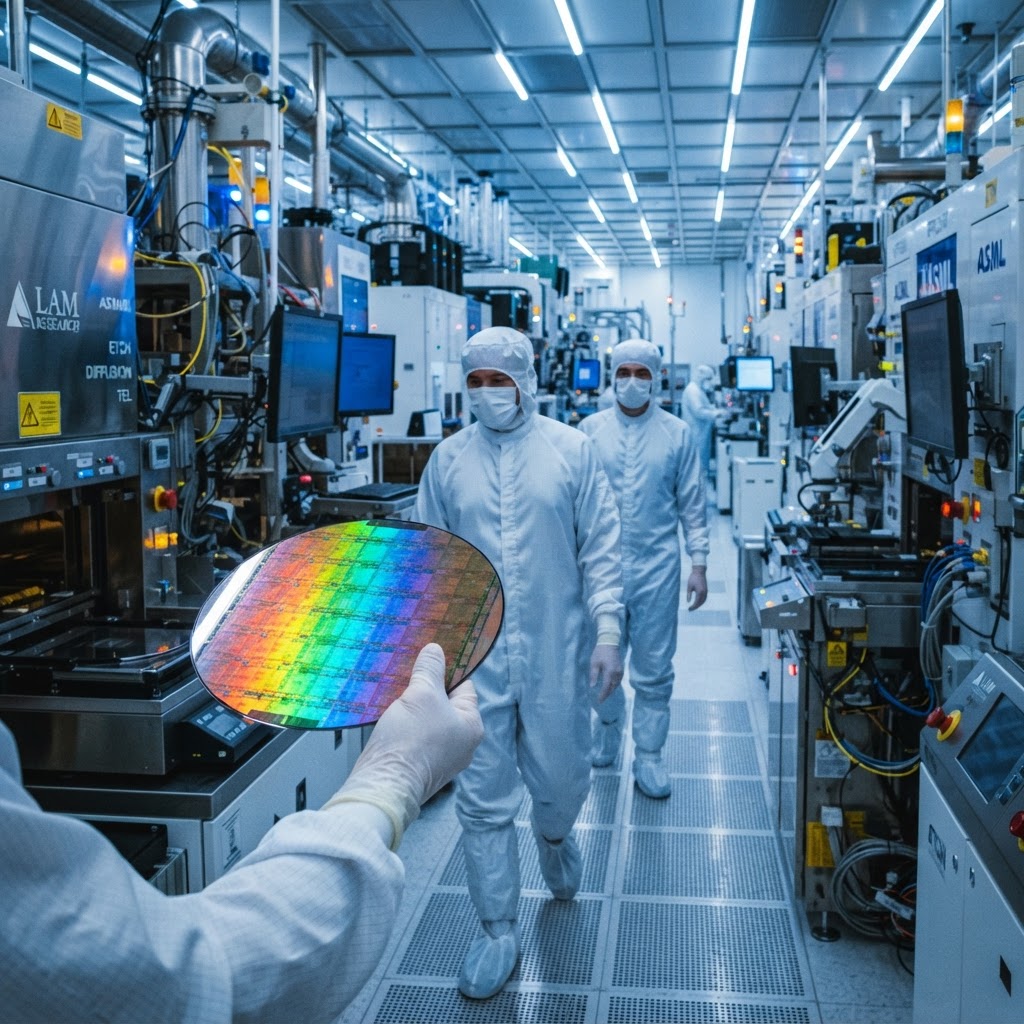
In 1983, Samsung shipped a 64K DRAM memory chip. It was years behind the leaders. Then Samsung did the thing that made it formidable: it kept building capacity through the downturns, when competitors cut back. Every time memory prices crashed and rivals retreated, Samsung spent more. By 1992 it was the world's largest producer of memory chips, and it has essentially never surrendered the position.
That is the hinge of the whole story. Owning memory, and later displays, meant that when the mobile era arrived Samsung didn't merely design phones — it manufactured the most valuable components inside them, including for its competitors. Apple's own iPhone processors were fabricated by Samsung for years.
Burning the Inventory
By 1993 Lee Kun-hee — the founder's son, who took the chairmanship after his father's death in 1987 — had grown intolerant of Samsung's reputation for cheapness. He issued the Frankfurt Declaration: "Change everything except your wife and children."
His most quoted act came in 1995. Handed a batch of 150,000 defective phones and fax machines, he had them piled in the yard at Gumi, made the workers who built them watch, and set the pile — worth tens of millions of dollars — on fire.
The message landed. Within a decade Samsung was winning international design awards, leading global television sales, and pioneering flat-panel and OLED displays that competitors had to buy from it.
Galaxy, and the War With Apple
The iPhone landed in 2007 and reset the industry. Samsung's answer, the Galaxy line, arrived in 2009 on Google's Android — and then did something Apple had not: it fragmented the market on purpose. Big screens when Apple insisted small was correct. A stylus. Budget models, mid-tier models, camera-obsessed flagships. Where Apple offered one right answer, Samsung offered every answer.
By 2012 Samsung had passed Apple to become the world's largest smartphone maker by units — a position it has held for most of the years since, even as Apple has taken the larger share of industry profit.
The rivalry turned brutal in the courts. Steve Jobs' "thermonuclear war" over Android produced a global patent conflict spanning some fifty lawsuits across ten countries, a billion-dollar 2012 US jury verdict against Samsung, years of appeals reaching the US Supreme Court, and a final settlement only in 2018. Through all of it, the two companies remained locked in the strangest arrangement in modern business: bitter rivals in the store, and supplier-and-customer in the factory. Apple has continued buying displays and memory from the company it was suing.
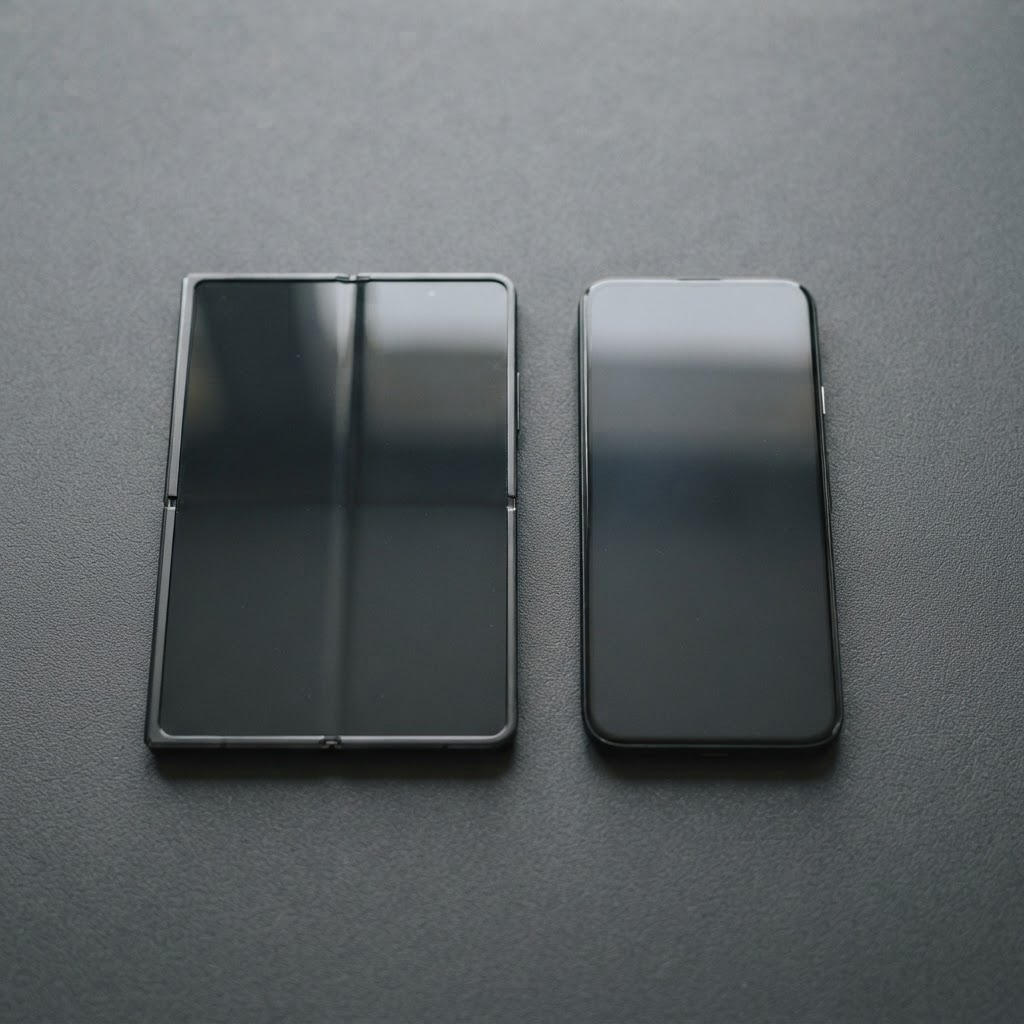
When the smartphone slab stopped evolving, Samsung reopened the question of physical form with the Galaxy Fold in 2019 — an awkward, expensive, much-mocked first attempt that has since matured into a category Apple has still not entered.
What Samsung Is Today
Samsung Electronics is now among the largest technology companies on Earth by revenue, employing over 250,000 people. It is simultaneously:
- the world's largest memory chip maker, and a major contract chip fabricator;
- the dominant supplier of OLED and advanced display panels, including to rivals;
- the world's leading seller of smartphones and one of the leading sellers of televisions, a title held for nearly two decades;
- a top maker of home appliances, plus tablets, wearables, laptops and image sensors;
- and part of a wider group that still builds ships, skyscrapers, refineries, defence systems and insurance policies, and runs hospitals, hotels and a theme park.
The Three Stars, Still Burning
Strip away the scale and the arc is almost absurdly simple. A young man sells dried fish, fruit, vegetables and noodles out of a Daegu storefront in 1938. He notices that trading other people's goods is a thin business, and manufacturing is a thick one. He notices that the highest margins hide in whatever is hardest to make. And he keeps moving up that ladder — sugar, wool, insurance, ships, televisions, silicon, screens, phones — never once mistaking the rung he is standing on for the top.
Lee Byung-chul named it for three stars because he wanted something eternal. Nearly nine decades on, the fish trader's name is stamped on the memory in the world's data centres, the glass in the world's pockets, and the one product line that has never let Apple rest.
The truth can't be hidden: the grocer built the future.

Comments (0)
Be the first to share your thoughts!
Your voice matters. Every comment helps build our community.
Discussion Starters
No comments yet. Be the first to share your thoughts!