




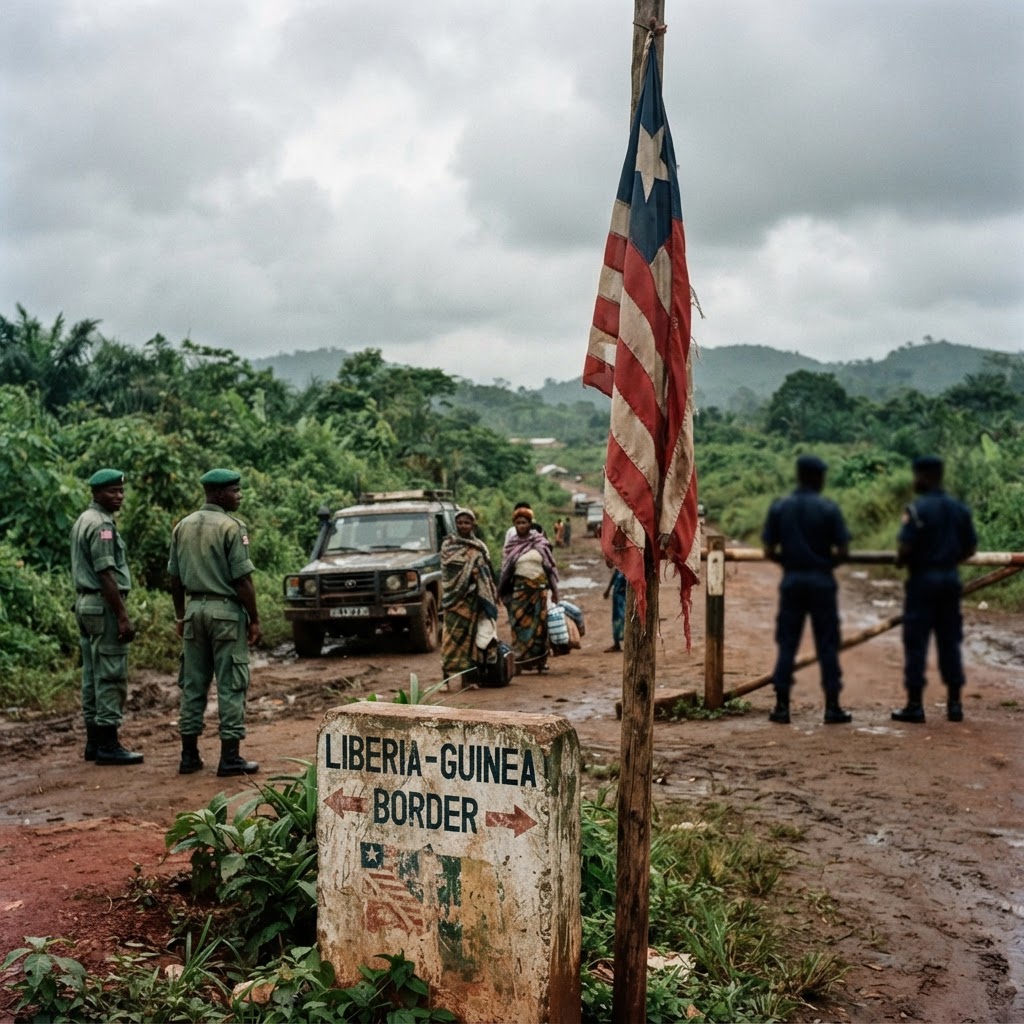
Opinion: President Boakai Should Resign Over Liberia's Border Crisis
A government that cannot defend its borders—its first and foremost responsibility—does not deserve to remain in power. When a state refuses to project and use its lawful authority under the 1862 treaty with the United States, and then allows Guinea to violate its sovereignty and continue occupying its territory for months without a decisive response, that failure becomes more than weakness. It becomes, in the eyes of many citizens, a betrayal of the nation.
For critics of the current administration, this is not merely a policy failure. It is a test of patriotism, leadership, and national resolve. They argue that President Joseph Boakai should resign because the continued border crisis happened on his watch and because the state has not acted with the urgency expected of a sovereign republic.
Liberian history provides a painful comparison. When Britain seized Liberian territory in the west by force of arms—what became known as the Gallinas Territory—President Howard resigned because it happened during his administration. To many, that resignation was an act of patriotism and accountability. By that same standard, they argue, President Boakai should step down.
The controversy also reopens long-standing historical grievances. Liberia is far older than Guinea as a modern republic, yet Guinea's claims are viewed by many Liberians as deeply offensive, especially when tied to colonial-era arrangements that followed the forced loss of Liberian territory. Critics reject what they describe as historical legacy ownership claims grounded in colonial conquest, arguing that France took Liberian land by force and later incorporated those areas into neighboring territories.
This is why many voices now insist that Liberia must pursue the matter far beyond regional diplomacy. They say the country should take the dispute to the International Court of Justice, seek formal rulings on contested territory, and press claims for reparations tied to historical seizures by France and Great Britain. For these critics, the issue is not only the present-day border line. It is the larger question of whether Liberia will continue to accept the consequences of historical dispossession without a full legal challenge.
The ECOWAS intervention requesting Guinea to withdraw is, in this view, not a diplomatic victory but a national embarrassment. To rely on outside appeals for respect of Liberia's territorial integrity is seen as a humiliation for a republic with nearly two centuries of statehood. The deeper wound is not only that a violation occurred, but that Liberia appeared unable or unwilling to enforce its own sovereignty.
At its core, this debate is about the meaning of nationhood. If a state cannot secure its territory, defend its legal boundaries, and respond firmly to encroachment, then citizens will inevitably question the legitimacy of those in power. That is why this border dispute has become more than a foreign policy issue. It has become a referendum on leadership itself.
For those who hold this view, the conclusion is blunt: Liberia's sovereignty must be defended with seriousness, urgency, and legal clarity—and if the current leadership cannot do that, then it should give way to one that can.

Comments (0)
Be the first to share your thoughts!
Your voice matters. Every comment helps build our community.
Discussion Starters
No comments yet. Be the first to share your thoughts!