





TND Washington Desk | Washington | Tuesday, November 17, 2026
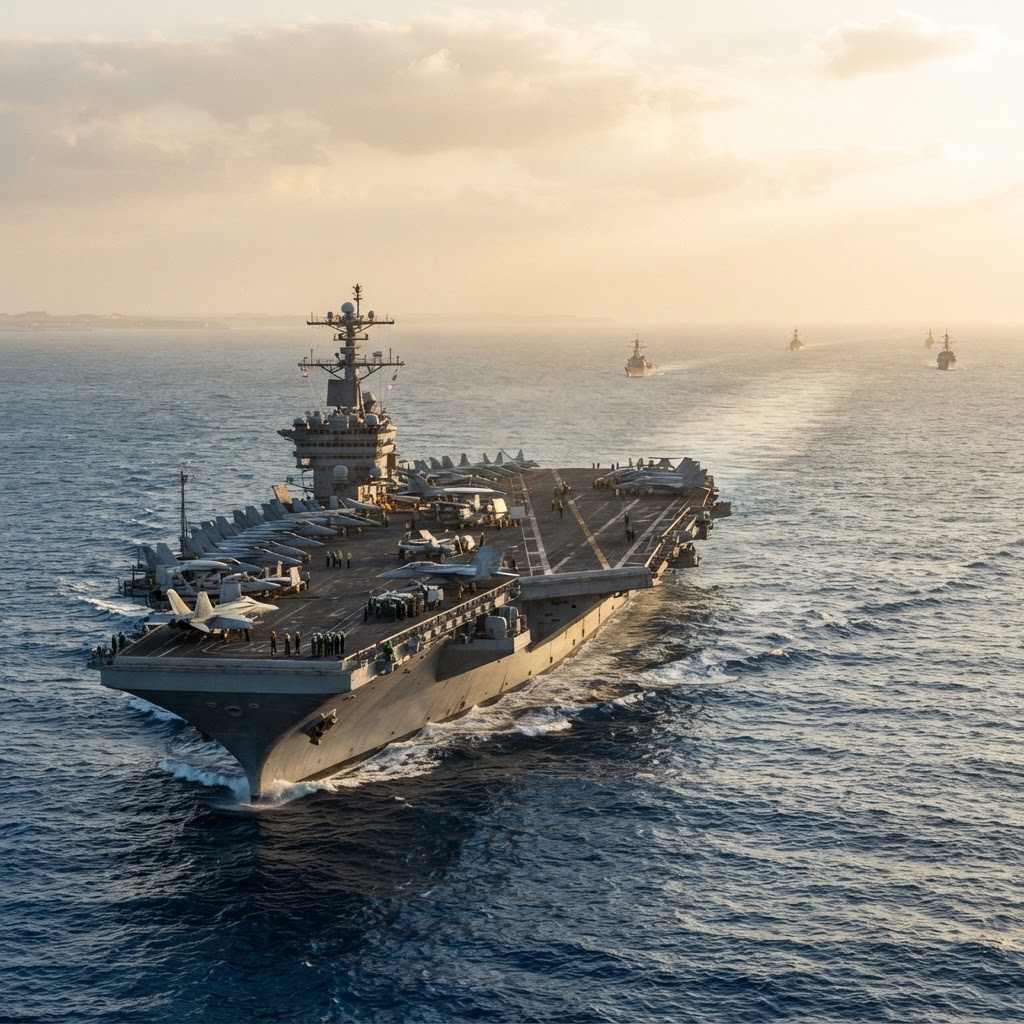
A third U.S. aircraft carrier has reached the Middle East. It is the largest show of American naval power in the region in months, as President Donald Trump weighs whether to end the eight-month war with Iran or push harder.
On Monday, U.S. Central Command posted photos of the USS Theodore Roosevelt in its area of operations. The Roosevelt joins the USS George H.W. Bush, which arrived in April, and the USS George Washington, which arrived in August. CENTCOM described it as a scheduled deployment, and carrier groups rotate through the region, so all three are not expected to stay long.
The Navy's force in the Arabian Sea now includes three carriers, 13 destroyers, two cruisers and a littoral combat ship. Two more destroyers are in the Red Sea. The USS Makin Island amphibious group, carrying about 2,000 Marines, deployed with the Roosevelt but has not yet reached the region.
Trump: 'locked and loaded,' but 'effectively over'
The president has sent mixed signals. Last week he warned that the U.S. military was "locked and loaded" and said Washington was watching Pickaxe Mountain, a site linked to Iran's nuclear program, for signs of activity. "If something does not work out, I would not hesitate" to act, Trump told radio host Hugh Hewitt on Thursday.
After meeting Qatar's prime minister, however, Trump told reporters that new major strikes were highly unlikely and that the war "militarily is effectively over." He also said the U.S. no longer needs a deal with Tehran.
Talks have stalled. Trump insists any deal must cover Iran's nuclear program. Tehran wants the U.S. to accept core conditions first, starting with lifting the naval blockade that keeps Iranian oil off world markets.
Vance: 'No daylight' with Trump
Vice President JD Vance pushed back on talk of a rift on Monday. After the midterms he had posted that "the reason we lost is the war." Asked about that on Fox News, he told Laura Ingraham: "There's no daylight between the president or any other senior member of the administration."
Vance said the administration would not let the conflict drag on. "We told the American people we would do no more forever wars," he said. "We are not going to allow this to become a 10- or 15-year commitment or, frankly, even a two-year commitment."
"We have destroyed the nuclear program. We have destroyed Iran's conventional military," Vance added. "The President of the United States has a lot of options... He could say, 'We're done now.' He could of course exert more military and diplomatic pressure on the Iranians."
Vance was a lead negotiator in this summer's ceasefire talks. Trump has since told him to focus on the administration's domestic anti-fraud campaign instead.
Danger in the Strait of Hormuz
Shipping lanes remain the main flashpoint. Before the war, about a fifth of the world's oil passed through the Strait of Hormuz. Lloyd's List says traffic is still below a third of prewar levels.
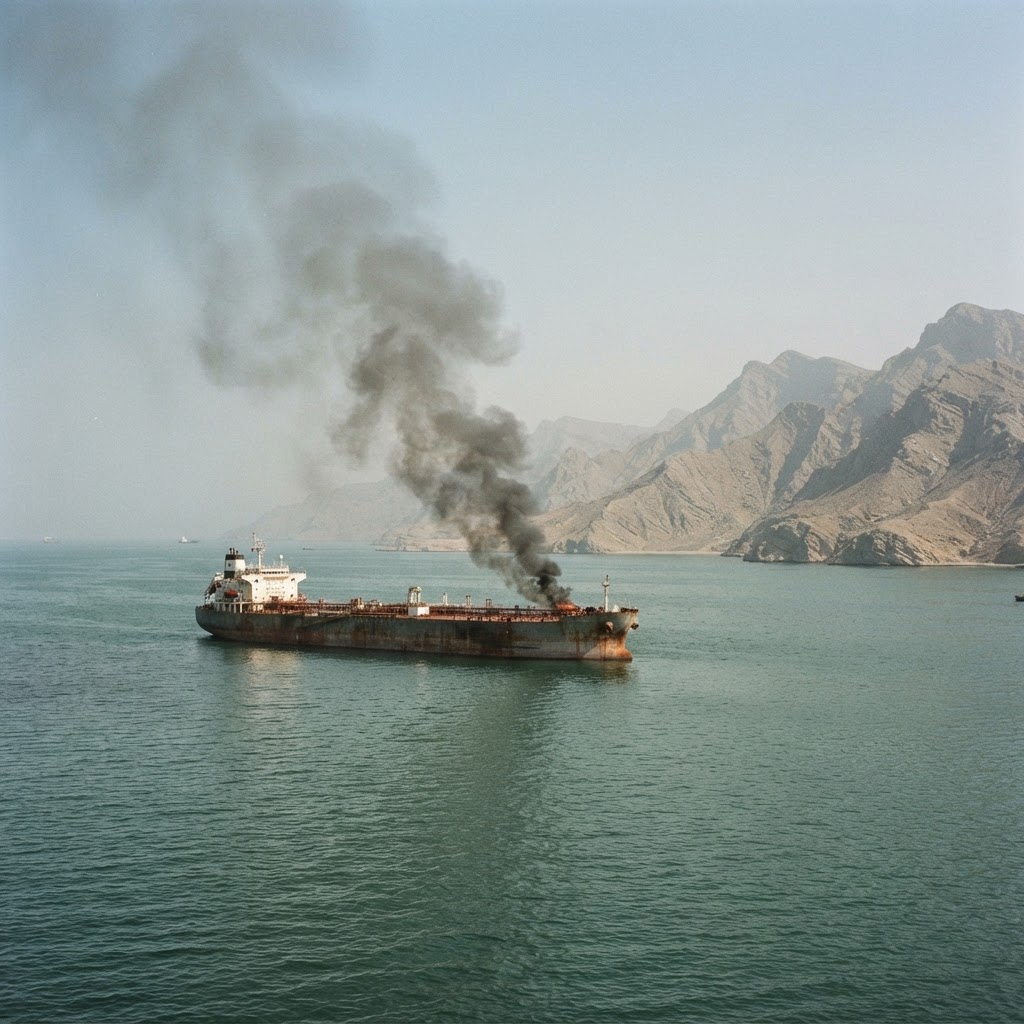
Iran's Revolutionary Guard navy says mines have damaged six tankers since Sunday. Iranian state media reported a fourth mine strike in 24 hours on Monday, though officials did not name the vessel. Separately, the U.K. Maritime Trade Operations agency said a tanker north of Khasab, Oman, was disabled by an attack that caused an engine-room fire. Its crew was reported safe.
Iranian state TV warned shipping companies that a U.S.-backed route along the Omani coast is dangerous because of mines. Washington says that route is safe and open. CENTCOM says it has redirected 150 merchant vessels and disabled five since the blockade began in June.
Iran also claimed it attacked a U.S. radar installation in Bahrain. Bahraini officials said the weapons were intercepted. Late last week, the U.S. military denied a similar Iranian claim.
No return for nuclear inspectors
A senior Iranian official said Sunday that inspectors from the International Atomic Energy Agency will not be allowed to examine damaged nuclear sites until the war has "permanently ended." IAEA inspectors visited the Bushehr plant in September but have not reached other sites hit by U.S. strikes.
Wider war: Yemen and the Red Sea
In Yemen, Iran-backed Houthi forces have pushed government-allied troops back from areas along the Bab el-Mandeb Strait, another key oil route. The Houthis said Saudi strikes killed or wounded 37 people in 24 hours. Saudi Arabia has not commented.
Political fallout at home
The war played a major part in Republicans' heavy midterm losses. Pressure on the White House grew further after a CBS 60 Minutes report on U.S. military failures early in the conflict, including an Iranian drone strike on an Army command post in Kuwait that killed six American soldiers. Trump attacked the report.
The U.S. and Israel launched the war at the end of February. With the new Congress due on January 3 and Democrats in control, lawmakers are expected to scrutinize its cost and goals more closely.
Sources: CBS News, The Guardian, Reuters, U.S. Central Command, UKMTO, Lloyd's List, Fox News, Deadline.

Comments (0)
Be the first to share your thoughts!
Your voice matters. Every comment helps build our community.
Discussion Starters
No comments yet. Be the first to share your thoughts!