




Exclusive Cover Story
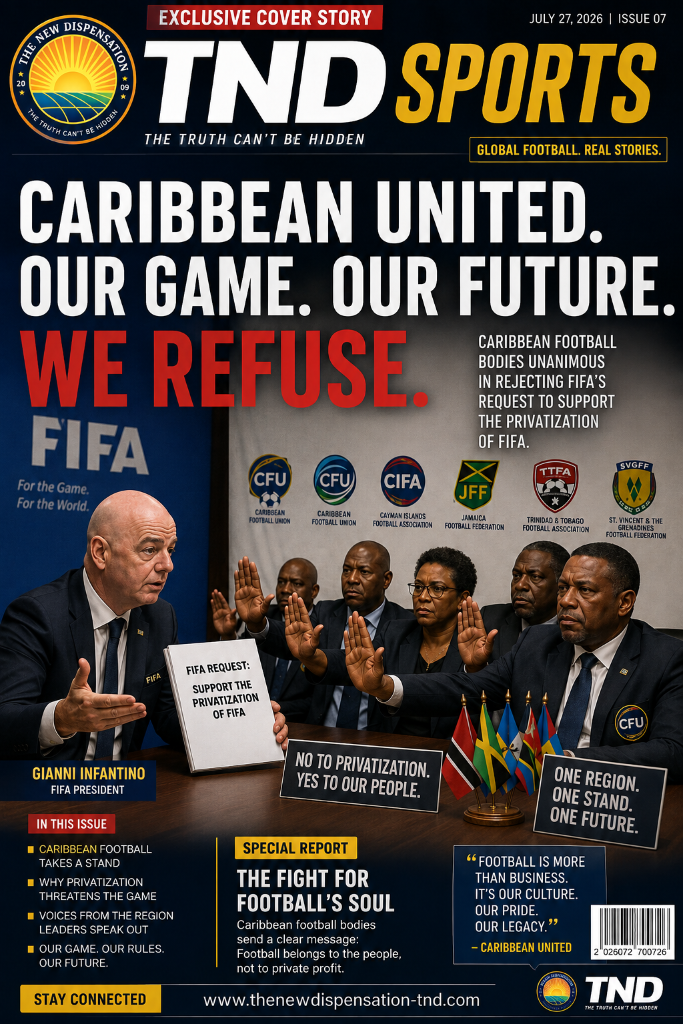
A widening rebellion is taking shape across world football after Caribbean football bodies firmly rejected an alleged proposal to privatize FIFA, with Europe’s governing football bloc now threatening a sweeping boycott if the plan advances.
What began as resistance from Caribbean associations has turned into a broader fight over the identity of the game itself: should the world’s governing football body remain a nonprofit institution built around stewardship, development and shared global participation — or be pushed toward a profit-first private structure?
For Caribbean leaders, the answer is unequivocal.
Caribbean Football’s Message: We Refuse
Football officials from across the Caribbean are presenting a united front against the idea, arguing that FIFA was never created to become a private commercial enterprise controlled by a smaller concentration of financial interests.
Their resistance is being framed not simply as an administrative disagreement, but as a defense of football’s public mission. Regional leaders argue that for smaller and developing football nations, FIFA’s current structure is tied directly to access, representation, development grants, youth growth, coaching investment and competitive opportunity.
In their view, privatization would risk shifting the center of power even further toward wealthy markets, major investors and elite commercial actors — leaving smaller football regions with less influence over a sport they helped build globally.
Several Caribbean voices are also warning that once the governing body becomes a business first, the pressure to treat tournaments, participation rules and development priorities primarily as revenue assets would intensify.
Why the Push Is Causing Such Backlash
Critics say the core problem is not modernization itself. Football bodies around the world understand that the sport is already deeply commercial, from media rights to sponsorship and global events. The real controversy is the idea of turning the nonprofit world structure into something fundamentally private.
Opponents fear that such a move could:
- weaken the principle of equal representation among member associations;
- reduce transparency over how football revenues are redistributed globally;
- tilt decision-making toward commercial return rather than sporting equity;
- deepen the divide between football’s richest regions and its most vulnerable ones;
- erode the legitimacy of FIFA as a world body acting on behalf of the game as a whole.
That concern is especially strong in the Caribbean, where football administrators often see governance fights not as abstract boardroom debates but as decisions that affect real grassroots survival.
UEFA Raises the Stakes
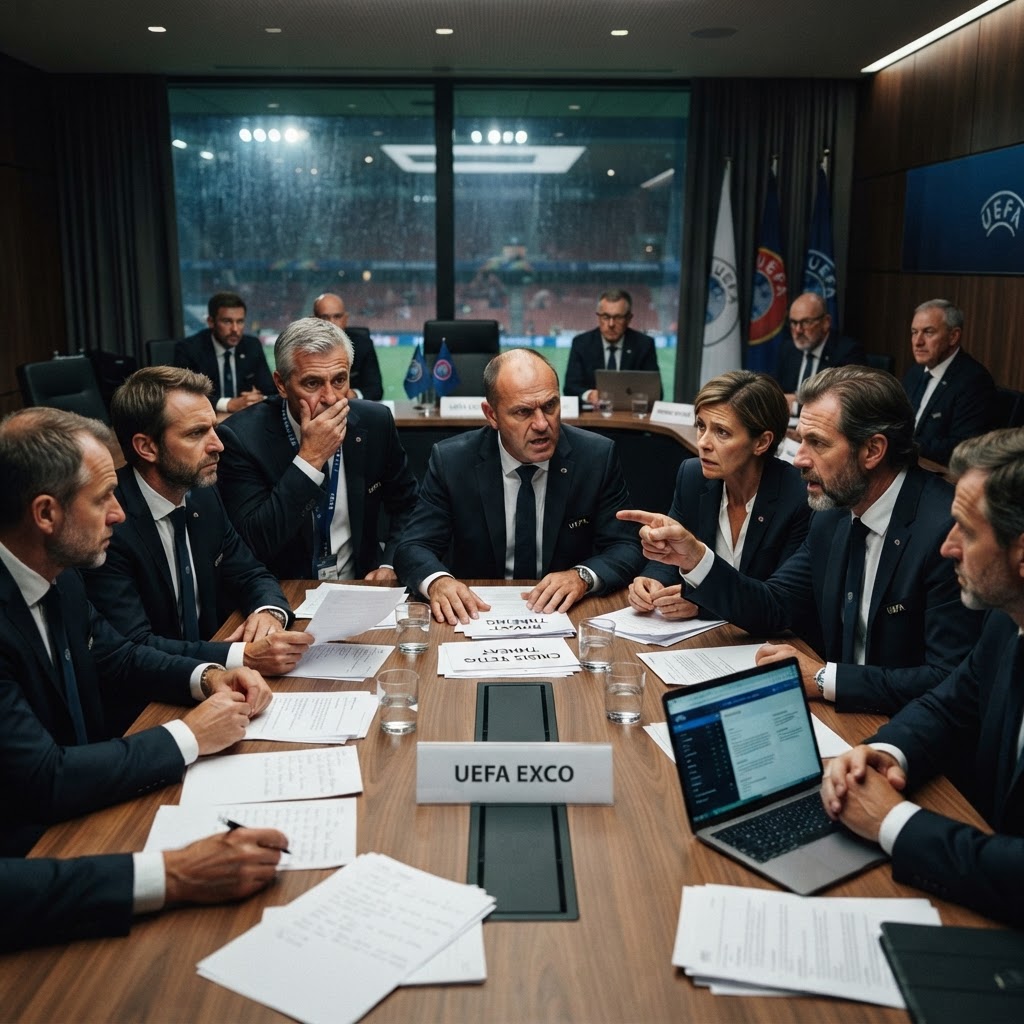
The confrontation escalated sharply after Europe’s football leadership signaled that it could boycott participation in FIFA leagues, competitions, matches and official activities if privatization becomes policy.
Such a move would transform a governance dispute into a full-scale institutional crisis.
Any coordinated European boycott would strike at the credibility, marketability and competitive status of FIFA-backed events. It would also signal that opposition is no longer confined to smaller federations or regional blocs seeking protection, but includes some of the most powerful football stakeholders in the world.
Europe’s warning reflects a wider belief that the world game cannot be governed like an ordinary private asset. Even among associations that favor reform, there is deep discomfort with a model that appears to place football’s global structure on a commercial ownership path.
The FIFA President Under Fire
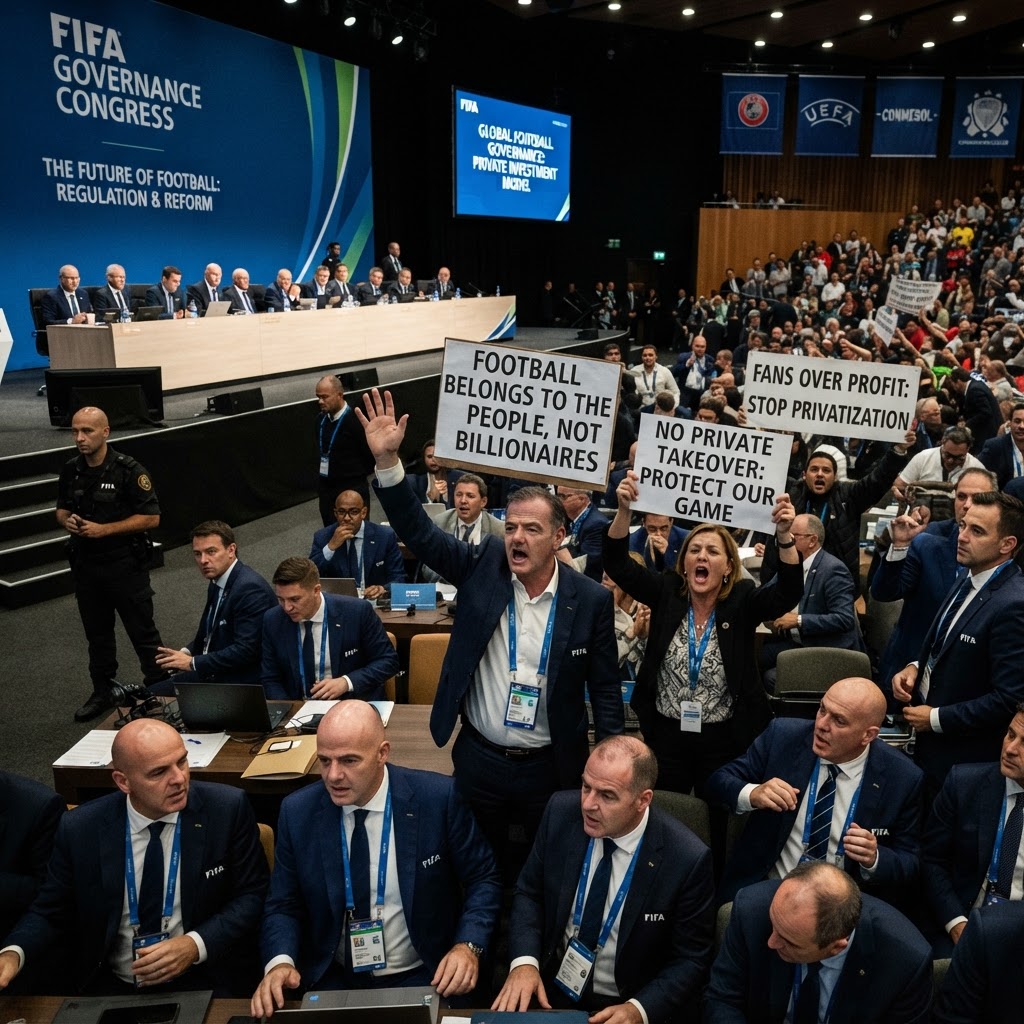
The FIFA president and the world body itself are now facing strong criticism from multiple directions.
Critics say the leadership has underestimated how explosive the privatization issue would become. What may have been presented by supporters as innovation, restructuring or a way to unlock capital is increasingly being heard by opponents as an attempt to permanently alter the purpose of the governing body.
That shift in perception matters. Once the debate becomes moral as well as financial, it is harder to contain. The argument is no longer only about governance models; it is about who football belongs to.
For many dissenting voices, the answer is simple: football belongs to players, supporters, member associations and communities — not to private ownership logic.
A Fight Over Football’s Soul
This is why the backlash is so broad.
The dispute has united very different parts of the football world around one central fear: that privatization would turn a shared global institution into a business vehicle whose first responsibility is no longer the sport’s worldwide development.
Caribbean administrators have become some of the clearest public defenders of that principle. Their message is resonating because it speaks beyond the region. In Africa, Asia, Oceania, Europe and Latin America, many football figures are asking the same question in different language: if FIFA changes its nature at the top, what happens to everyone further down the pyramid?
That question reaches from national teams to youth academies, from refereeing structures to women’s football development, and from solidarity funding to tournament access.
What Happens Next
If resistance keeps growing, the proposal could face a legitimacy problem even before any formal vote or structural step is taken.
The Caribbean bloc’s refusal has already turned the issue into a test of political consent inside football governance. UEFA’s boycott threat raises the cost even further. And the wider public criticism now surrounding the FIFA president means any effort to proceed would likely trigger months of institutional confrontation.
The immediate outcome is still uncertain. But one reality is now unmistakable: this is no longer a quiet boardroom conversation.
It is a global fight over governance, trust, representation and the future character of the world’s most popular sport.
Bottom Line
The privatization proposal has touched a nerve because it challenges the founding idea that world football should be governed in the interest of the game, not owned in the interest of profit.
Caribbean football bodies have made their position plain. UEFA has now drawn its own red line. And across the football world, criticism is growing louder.
If the plan moves forward, the backlash may not just slow FIFA down — it could fracture the global football order itself.



Comments (0)
Be the first to share your thoughts!
Your voice matters. Every comment helps build our community.
Discussion Starters
No comments yet. Be the first to share your thoughts!